
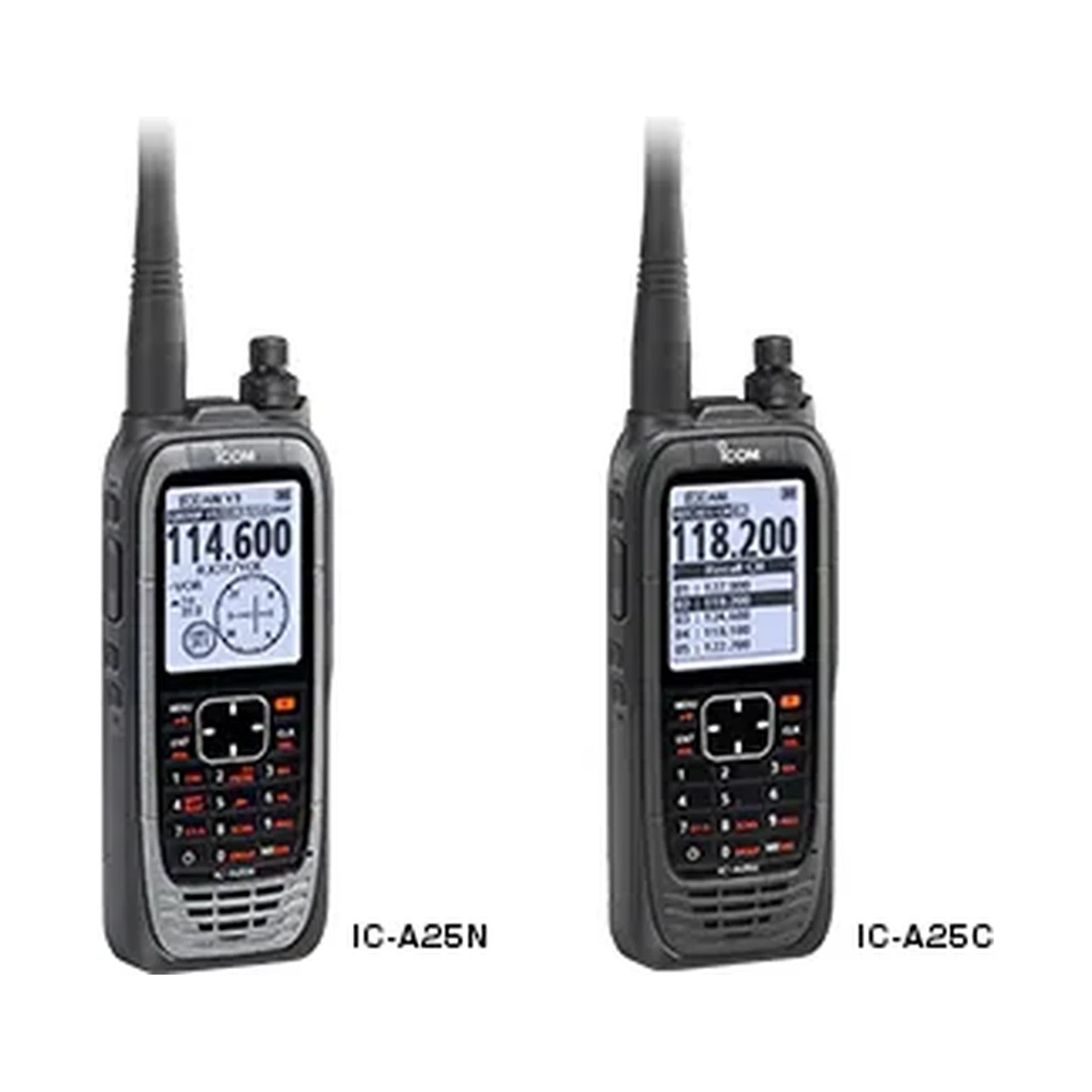
What the spec sheet lists
Icom's IC-A16 and IC-A25N/IC-A25C both list receive capability across 161.650 to 163.275 MHz specifically for weather reception, alongside their primary VHF air band communication range. This is a genuine, useful hardware capability, and understanding exactly what it connects to is the difference between a feature that delivers real value and one that sits unused because nothing is broadcasting on the frequency the radio is listening to.
What broadcasts on that frequency range
The 161.650 to 163.275 MHz range corresponds to the NOAA Weather Radio band, a continuous broadcast weather service operated across the United States and parts of Canada, delivering routine forecasts, observations and severe weather warnings on a small set of fixed channels within that range. A radio built with weather channel reception as a feature is built to receive that specific broadcast service, which is precisely the kind of ground-infrastructure-dependent feature covered elsewhere in this series in the context of ADS-B In datalink weather: the hardware capability to receive is universal, but the broadcast it is designed to receive exists only where the originating service actually operates.
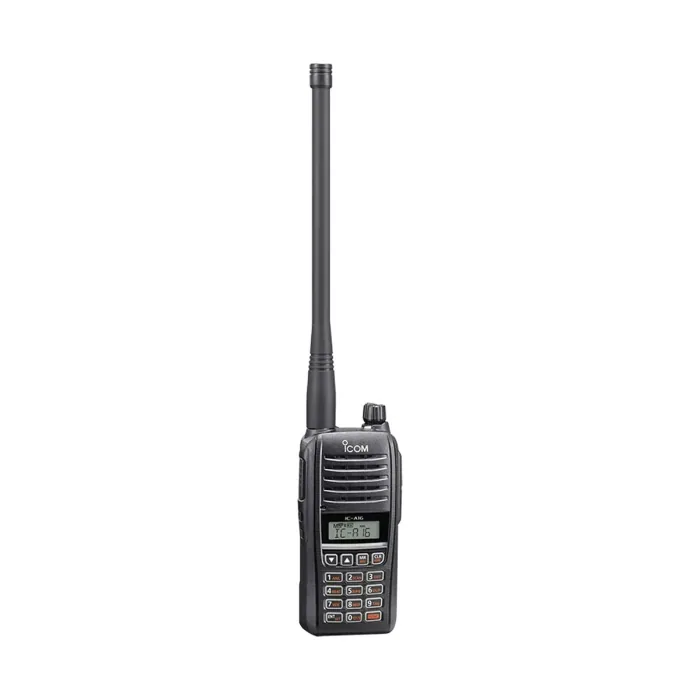
What this means for use in India
There is no NOAA Weather Radio service in India, because NOAA is a United States government agency operating a US domestic broadcast network. A weather-channel-capable handheld radio flown in Indian airspace will not receive continuous NOAA-style weather broadcasts on that frequency range, for the same underlying reason a portable ADS-B receiver does not pick up FIS-B weather data outside the United States: the receiving hardware works correctly, but the specific broadcast infrastructure it was built to receive is not present locally. Confirm current local weather broadcast arrangements, if any exist on adjacent frequencies, with the relevant Indian aviation authorities rather than assuming the weather channel feature functions identically to how it does in North American marketing material.
Buying the radio for the right reasons
None of this diminishes the IC-A16 or IC-A25 series as VHF air band communication radios, which is their primary function and where their genuine value for an Indian operator lies: reliable, dual-spacing-capable air-to-ground and air-to-air communication, backup radio capability, and, on the IC-A25N, GPS-based navigation backup. The weather channel reception should be understood as a feature carried over from a global product platform, present in the hardware and functional wherever the corresponding broadcast service exists, rather than a benefit an Indian buyer should expect to use routinely.
The broader pattern worth remembering
- A receive frequency range on a spec sheet describes hardware capability, not the presence of a broadcast service on that frequency wherever the radio is flown.
- US-market aviation equipment frequently lists US-specific broadcast services, NOAA weather radio, FIS-B datalink weather, as standard features, and both require the corresponding American ground infrastructure to actually deliver anything.
- The core communication capability of equipment like the IC-A16 and IC-A25 series is not affected by this distinction and remains fully functional in Indian airspace.
- When a specification sheet lists a feature dependent on broadcast infrastructure, it is worth a direct question before purchase about whether the corresponding service exists where you will actually be flying.
ASPL supplies the full Icom aviation handheld range in India and can speak plainly about which listed features deliver real value locally and which are carried over from a global product line.