
A radio survey is not a paperwork exercise, and the equipment being switched on is not the same as the equipment passing. The surveyor is testing whether a vessel can raise a distress alert by the means her sea area requires, whether the crew can operate what is fitted, and whether the documentation supports both claims. Almost everything that goes wrong on the day is something the vessel could have fixed the week before at no cost.
Who conducts it and what it produces
In India, radio surveys of Indian-flag vessels are carried out by nautical surveyors of the maritime administration at the Mercantile Marine Department offices, published as Mumbai, Kolkata, Chennai, Kochi and Kandla, and by Recognised Organisations authorised to act on the administration's behalf. The framework is the domestic rules giving effect to SOLAS Chapter IV. A satisfactory survey supports the Cargo Ship Safety Radio Certificate, or for a passenger ship the radio element of the Passenger Ship Safety Certificate, together with the Record of Equipment appended to it. Surveys fall into initial, renewal, intermediate and annual categories, with the intervals following the vessel's type and trading area, so confirm the applicable cycle for your vessel with the administration or your Recognised Organisation rather than assuming it. Testing and servicing of items such as EPIRBs, SARTs and AIS units is separately restricted to approved service stations, and the surveyor will expect to see the resulting certificates.
What the surveyor is actually checking
- That the fit matches the sea area. The Record of Equipment states what the vessel carries; the surveyor checks the real installation against it, and against the areas she is certified to trade in.
- Distress alerting by two independent means. Every vessel must be able to alert by at least two separate and independent means using different radiocommunication services, so both routes get tested, not just the convenient one.
- DSC operation. Continuous watch on channel 70, and on 2187.5 kHz where MF is fitted. Correct MMSI programmed. A valid position reaching the radio, whether from an internal GNSS receiver or an NMEA feed.
- Power supplies. Main, emergency and reserve sources of energy, the reserve battery's capacity and condition, charger operation and the electrolyte and terminal state of a flooded bank.
- Antennas and feeders. Insulators, earth connections, coaxial runs and connectors, and whether MF/HF antenna tuning still works across the bands.
- Battery-dependent portables. Survival craft VHF sets, EPIRB and SART battery expiry dates and hydrostatic release unit dates.
- NAVTEX and MSI reception. That the receiver is working, printing or displaying, and set to the right stations.
- Crew and records. Operator certification, the radio log, distress alert testing records and evidence of the availability arrangement in force.
How to prepare
Preparation is mostly a matter of finding the expired, the undocumented and the corroded before the surveyor does.
- Pull every battery on board with a date on it: reserve bank, EPIRB, SART, survival craft handhelds. Anything expiring before the next survey window should be replaced now, not deferred.
- Check every MMSI actually programmed into every DSC device against the vessel's registration, and check the registration details themselves are current.
- Confirm the GNSS feed reaches each DSC set and that the display shows a live fix rather than a manually entered position.
- Inspect antenna insulators, earth straps and connector ends for salt and green corrosion. This is the most common quiet failure and the cheapest to correct.
- Run the reserve supply properly: take the installation off main power and confirm it operates for the required period rather than assuming the charger indication is telling the truth.
- Assemble the folder before the day: type approval certificates, the Record of Equipment, service station reports for EPIRB, SART and AIS, the shore-based maintenance agreement if that is your availability method, radio logs and operator certificates.
- Test NAVTEX reception, replace printer paper, and clear stored message memory so the receiver is demonstrably live.
- Brief the crew. A surveyor may ask an operator to demonstrate sending a routine DSC call or explain the distress procedure, and hesitation on that is a finding in itself.
Where a fit-out helps or hurts you
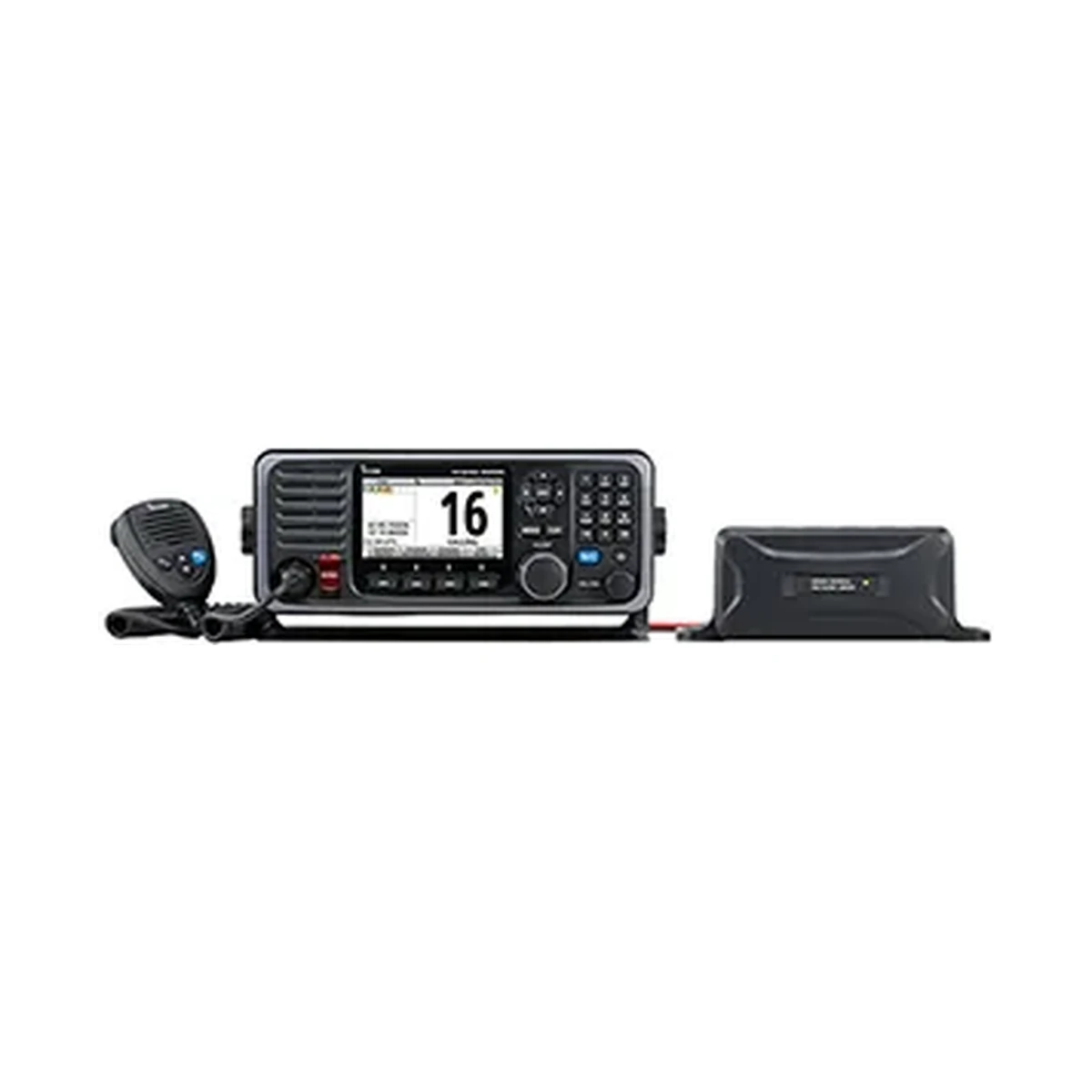
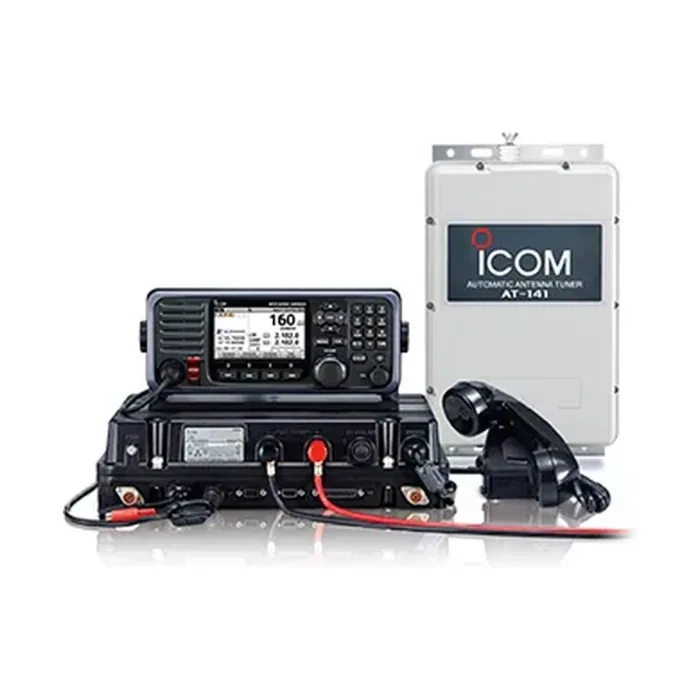
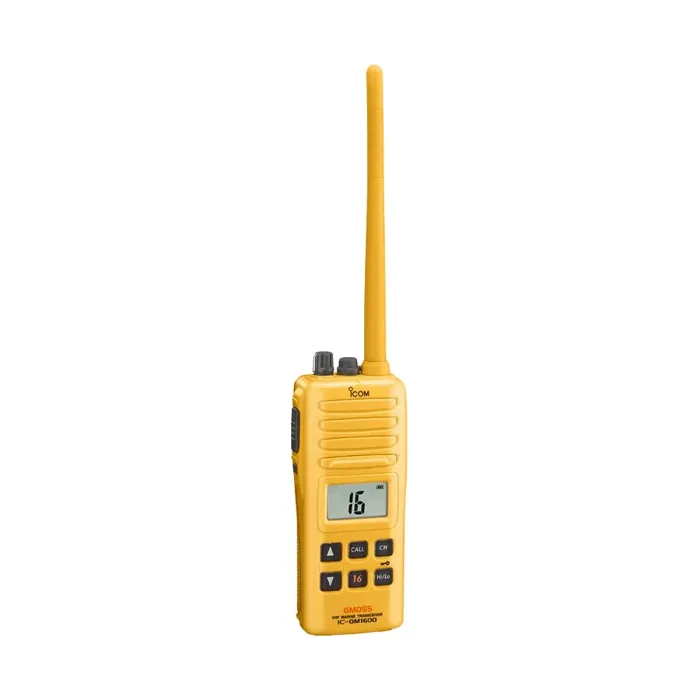
Equipment specified for the role makes surveys quieter. GMDSS installations such as the Icom GM600 on VHF and GM800 on MF/HF are built and type-approved against the standards the surveyor is working from, survival craft sets such as the Icom IC-GM1600 are built to IMO Resolution MSC.149(77), and NAVTEX receivers such as the Samyung SNX-300 cover both 518 and 490 kHz. Substituting a general-purpose marine radio into a GMDSS position is where owners get into difficulty, because the set may work perfectly well and still not be the equipment the certificate is issued against.