
Both classes of AIS transponder do the same fundamental job: they combine a GNSS receiver with a VHF transceiver working on the two international AIS channels at 161.975 MHz and 162.025 MHz, and they broadcast the vessel's identity, position, course and speed to anyone in range. The differences between them are in how hard they transmit, how they secure airtime, how often they report and how much information they carry. Those differences follow from the fact that Class A was written for ships under a mandatory carriage requirement and Class B was written for everyone else.
Transmit power and range
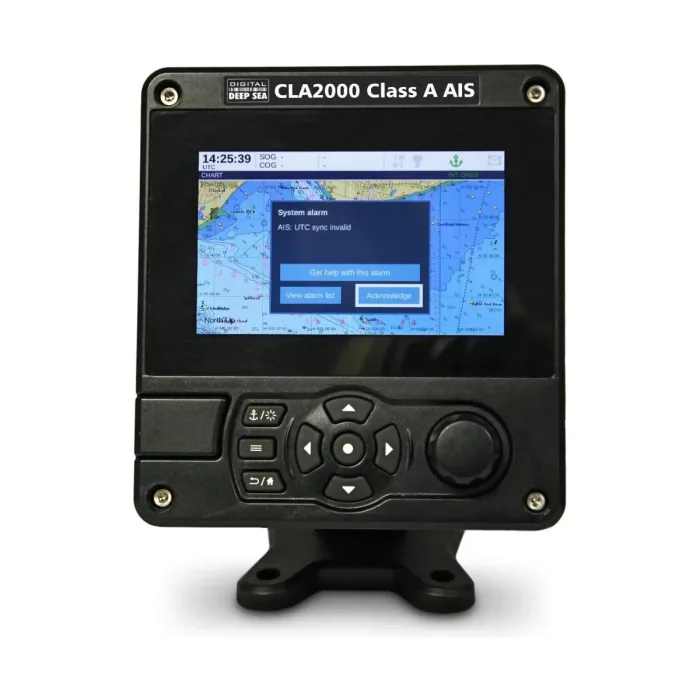
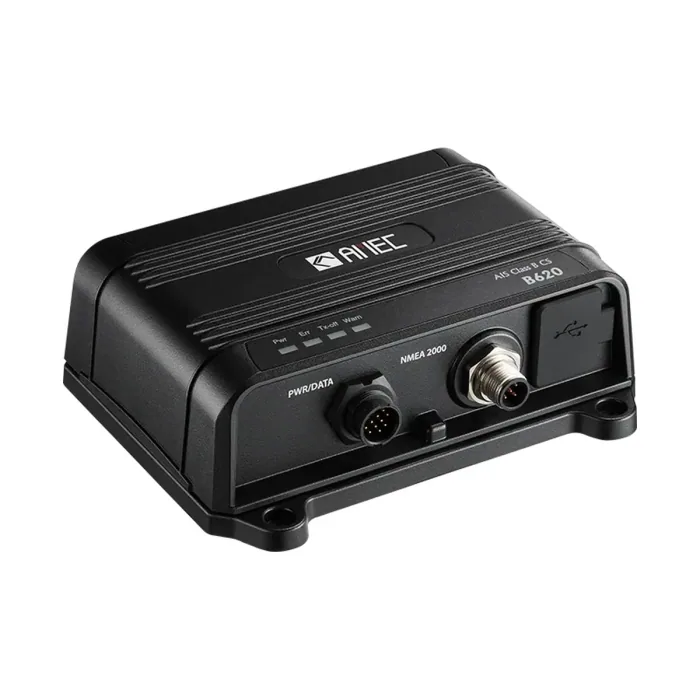
Class A transmits at a substantially higher power than Class B. The Digital Yacht CLA2000 is a 12.5 W Class A unit, while a conventional Class B carrier-sense transponder such as the AMEC B620 transmits at 2 W. Since AIS is a VHF service, range is dominated by antenna height and line of sight rather than by power alone, but the extra power still matters at the margins and in poor conditions, and it is one reason a Class A target is picked up further out by shore stations and by satellite receivers.
How each one claims a time slot
This is the difference that actually shapes behaviour in traffic. Class A uses SOTDMA, self-organising time division multiple access: the transponder reserves a slot in the shared timing structure in advance and announces its future slot use, so its transmission is scheduled rather than opportunistic. Standard Class B uses CSTDMA, carrier sense TDMA: it listens for a free slot and transmits only if it finds one. In an uncongested anchorage the two behave much the same. In a busy approach channel, where the data link is loaded, a CSTDMA unit can find itself waiting while a SOTDMA unit still gets its reserved slot.
Reporting rate and message content
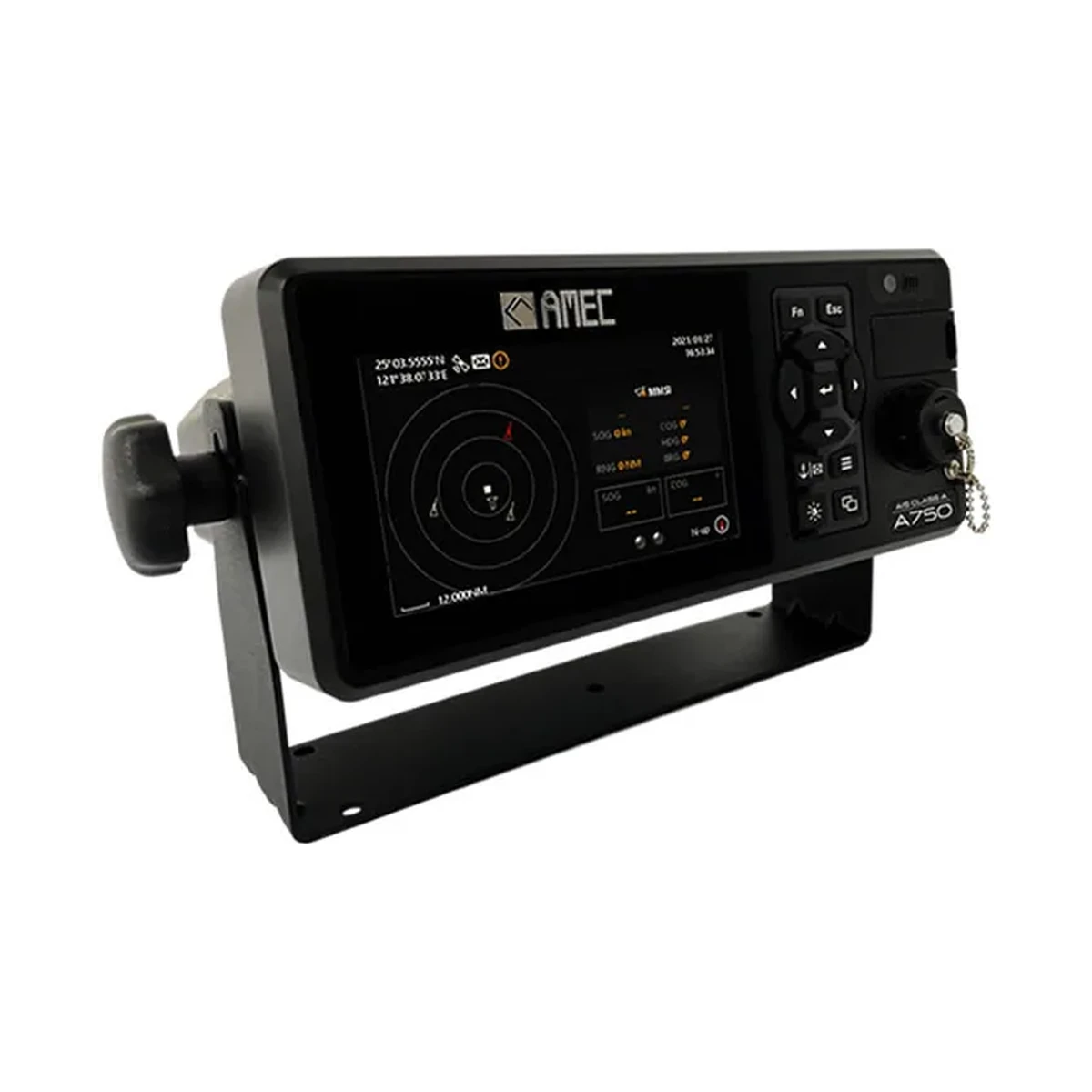
Class A reports its position far more frequently than Class B, and the interval shortens as speed increases or when the vessel is turning, so a manoeuvring ship updates every few seconds. Class B reports on a slower cycle. Class A also carries voyage-related data that Class B does not: navigational status, draught, destination and ETA, all of which the bridge team has to enter and keep current. That is why a Class A unit has a display and keyboard as part of the equipment rather than as an option. The AMEC A750, for instance, uses a 4.3-inch sunlight-readable colour display with an on-screen keyboard for exactly this data entry, and includes the pilot plug connector that lets a pilot boarding the vessel plug a laptop straight into the transponder.
The middle ground: Class B SO
Between the two sits a Class B variant that uses SOTDMA slot access and a 5 W output rather than CSTDMA at 2 W, commonly marketed as Class B+ or Class B SO. The AMEC WideLink B650 is certified to IEC 62287-2 and transmits at a selectable 5 W or 1 W over SOTDMA; the Digital Yacht AIT2500 and the AIT6000 are 5 W SOTDMA transponders in the same category. These units interoperate normally with existing Class A and Class B equipment. They suit ocean passagemakers, fast powerboats and smaller commercial vessels that are not under a mandate but operate in traffic where a guaranteed slot and a stronger signal are worth paying for.
Choosing between them
The decision is usually made for you. If the vessel is caught by the SOLAS Chapter V carriage requirement, which covers ships of 300 gross tonnage and upwards on international voyages, cargo ships of 500 gross tonnage and upwards not on international voyages, and all passenger ships irrespective of size, it needs a type-approved Class A transponder and nothing else will satisfy the requirement. If the vessel is not caught by it, the question becomes practical rather than legal:
- Operating mostly in quiet coastal water at modest speed: a Class B CS unit such as the AMEC B620 is sufficient.
- Operating regularly in dense traffic, at high speed, or offshore where satellite reception of your target matters: a Class B SO unit such as the AMEC WideLink B650 or the AIT2500.
- Short of mast fittings and already carrying a VHF radio: the splitter-equipped variants, the AMEC B620S, AMEC WideLink B650S or the AIT6000, share one antenna between the radio and the transponder.
Power draw is worth checking too on a small vessel with a limited electrical budget, as is which data interfaces the transponder offers, since the unit has to reach your chartplotter over NMEA 0183, NMEA 2000 or Wi-Fi to be of any use on the bridge.