
Two standards, not one
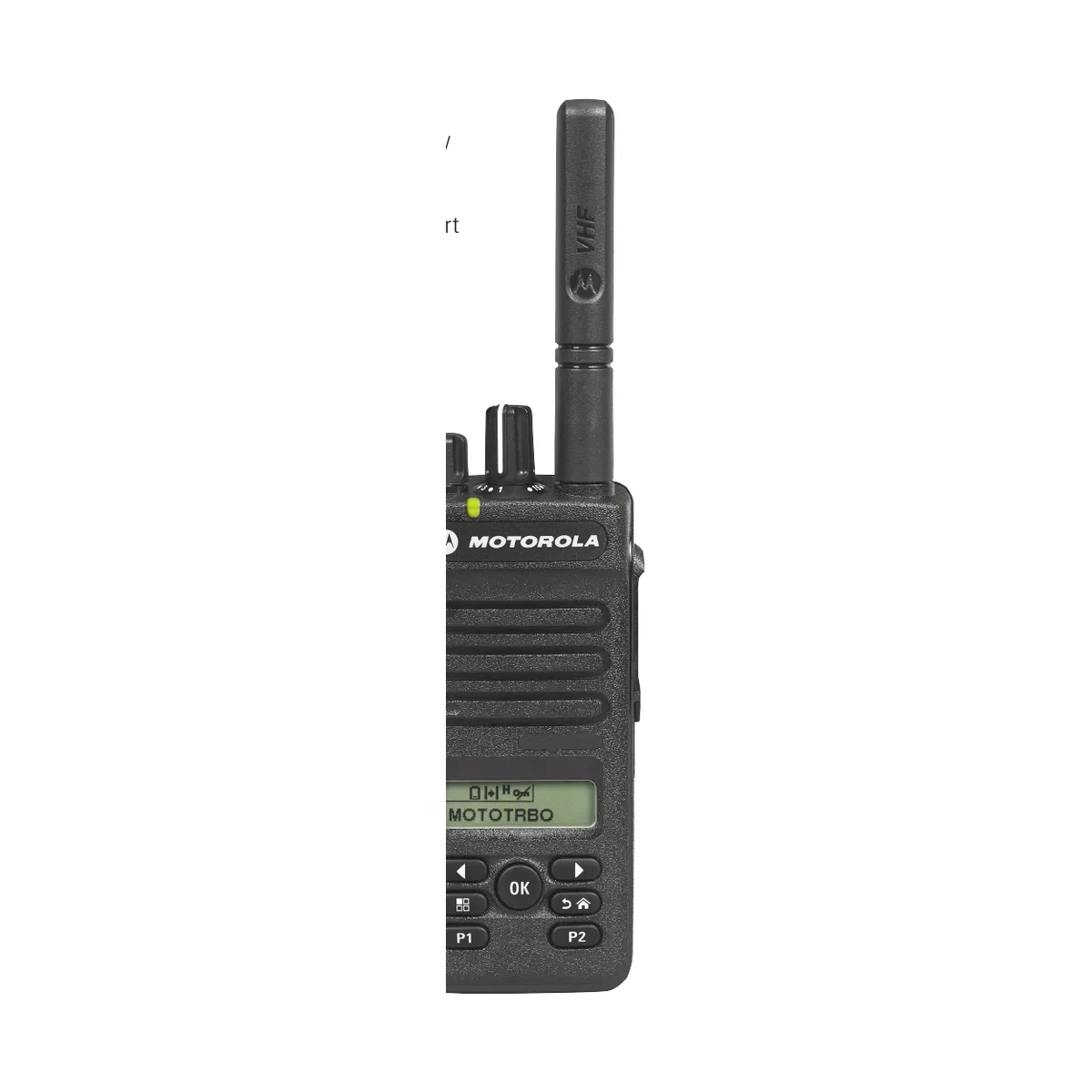
Digital two-way radio is not a single universal protocol the way, for instance, VHF air band communication is. Icom's current digital handhelds, the IC-F3400D, IC-F4400D and the IC-F3600D/IC-F4600D series, run NXDN, a protocol Icom co-developed with Kenwood. Motorola's digital handhelds, the XiR P6600i, XiR P8668i and MOTOTRBO R2, run DMR, Digital Mobile Radio, standardised by ETSI as TS 102 361 and explicitly certified to DMR Tier II on the MOTOTRBO R2's own specification. A radio built for one protocol cannot digitally decode transmissions from a radio built for the other, even though both operate on the same VHF and UHF bands.
What they share
Both NXDN and DMR are narrowband digital protocols aimed at squeezing more spectral efficiency and more capability out of the same VHF/UHF land mobile bands that analog FM has used for decades. Both support individual and group calling, both support various forms of data alongside voice, and both, being digital, share the general analog-versus-digital trade-offs covered elsewhere in this series: cleaner audio within range, a sharper cutoff at the edge of it.
Where the technical differences actually sit
DMR, as implemented on Motorola's range, uses two-slot TDMA, effectively doubling capacity within a single 12.5 kHz channel by splitting it into two time slots, each carrying an independent call. NXDN, as implemented on Icom's range, instead narrows the channel itself to an equivalent 6.25 kHz bandwidth per call rather than time-slicing a wider channel. Both approaches aim at similar outcomes, more calls fitting into the same allocated spectrum, using different underlying mechanisms.
Why this is a platform decision, not a spec shootout
Because the two protocols are not digitally interoperable, the practical question for a buyer is rarely which protocol has marginally better specifications. It is which ecosystem your existing fleet, your dealer's support, and any repeater or trunking infrastructure you already have is built around. A site running an Icom NXDN repeater system gains nothing from buying a DMR handheld, since the two cannot exchange digital calls; the same is true in reverse for a Motorola DMR system.
Comparing the actual hardware
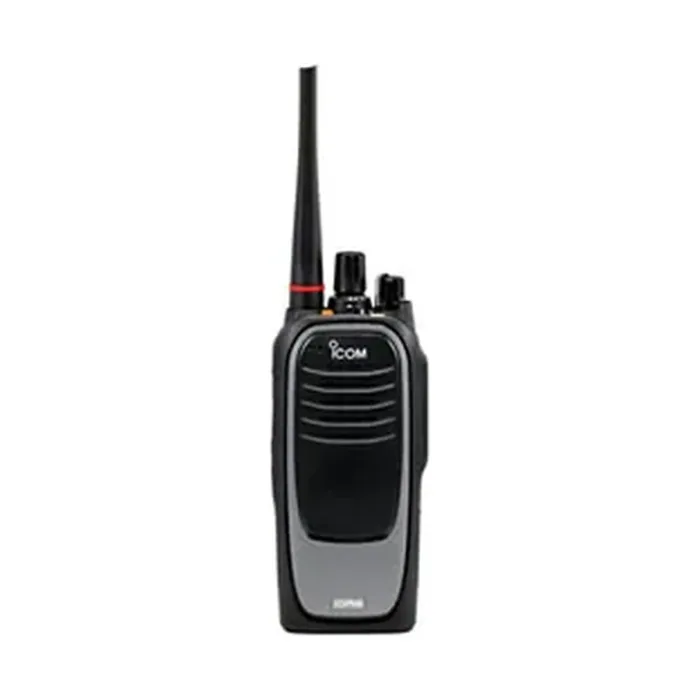
Setting the protocol question aside, the handhelds themselves are broadly comparable in role. The MOTOTRBO R2 is Motorola's entry-level DMR handheld, 64 channels, IP55 rated, up to 26.5 hours of digital battery life. The XiR P6600i steps up to 256 channels and IP67 waterproofing with battery life extending past 28 hours on its high-capacity pack. The XiR P8668i adds a full keypad, 1000-channel capacity, built-in GPS and Bluetooth for headset and data connectivity, positioning it as the more feature-rich unit in Motorola's range covered here. On the Icom side, the IC-F3400D and IC-F4400D offer up to 4000 channels as an option, IP68 dust-tight and waterproof protection, and trunking support through NXDN Type-D or dPMR Mode 3, with the IC-F3600D/IC-F4600D adding higher output power options and larger battery capacity.
Choosing between the two ecosystems
- Already running Icom analog or NXDN equipment, or working with a repeater system built on NXDN: stay within the Icom digital range for interoperability.
- Already running Motorola equipment, or specifically need DMR Tier II compliance for a system requirement: the Motorola DMR range is the consistent choice.
- Starting from nothing, no existing fleet or infrastructure: the decision comes down to which ecosystem's dealer support, feature set and hardware options better fit your operation, since both protocols are mature, widely deployed standards rather than one being a legacy technology and the other current.
- Running a large multi-site operation needing trunking: both NXDN Type-D and DMR Tier III trunking exist, and the choice again tracks whichever ecosystem the rest of your infrastructure is built on.
ASPL supplies both the Icom NXDN and Motorola DMR ranges in India and can advise on which ecosystem fits an existing fleet or a new deployment before you commit to one.