
The same shipboard problem, two certification routes
Aboard a tanker or other hazardous-cargo vessel, standard marine VHF handhelds cannot be carried in zones where cargo vapour may be present, and both Entel's FF series and Icom's IC-M85UL exist to fill that specific role: an intrinsically safe handheld built around the standard marine VHF channel plan rather than a land mobile one. Where they differ is the certification scheme each is built to and, correspondingly, exactly which regulatory framework each satisfies.
Entel's FF range: ATEX certified
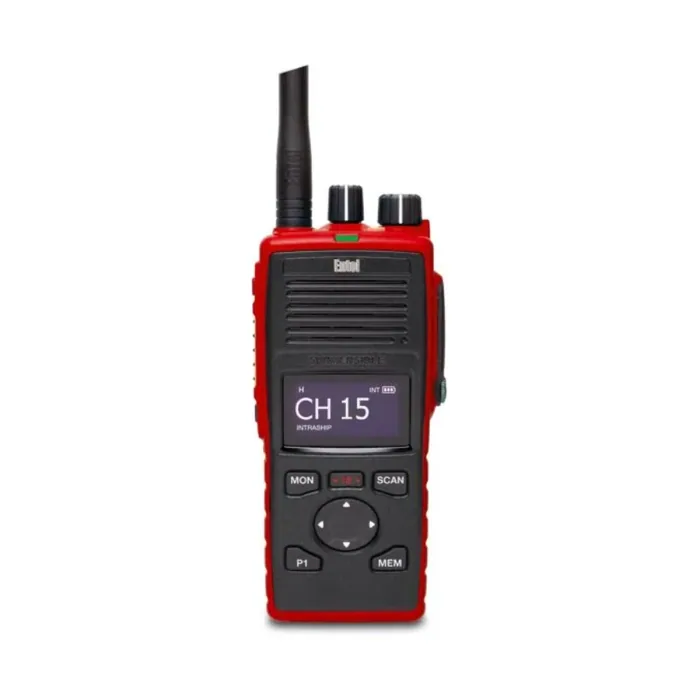
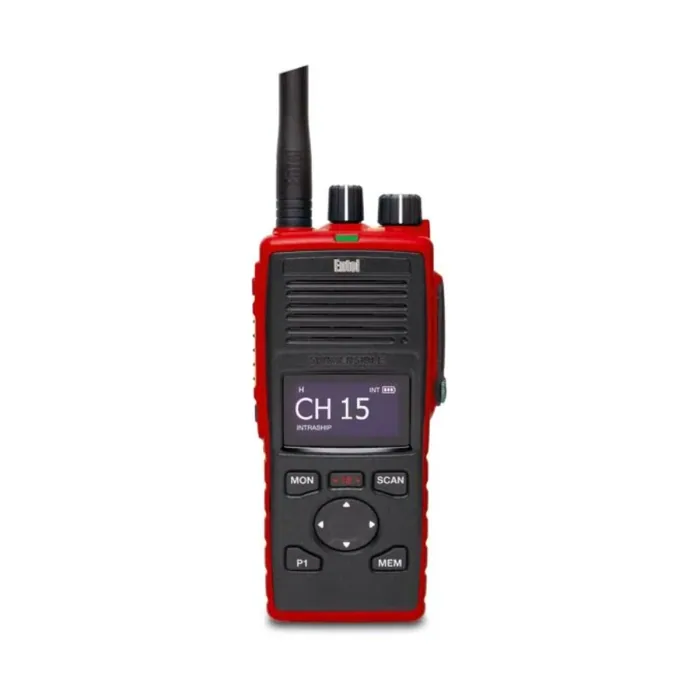
Models such as the DT944FF (VHF 156-163 MHz) and DT844FF carry ATEX certification, II 2G Ex ib IIC T4 Gb on the higher-gas-group models and IIB on others, tested under the European Zone-based classification framework covered in more depth in the dedicated certification-comparison article elsewhere in this series. This is the framework most directly relevant where a vessel or its flag state, charterer or classification society specifies ATEX or the closely related IECEx scheme.
The Icom IC-M85UL: UL913 certified
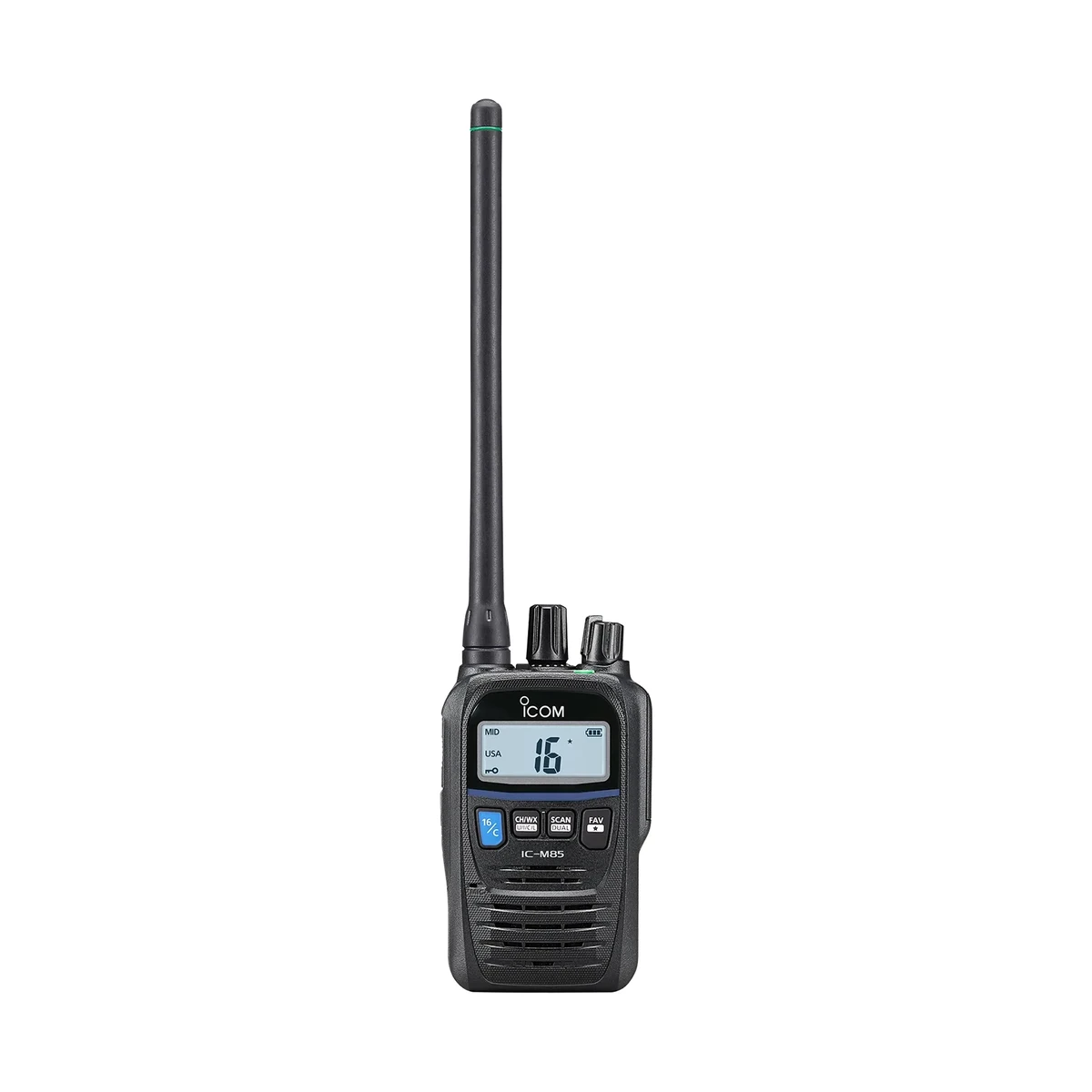
The IC-M85UL is certified to UL913, the North American intrinsically safe standard, specifically to UL913 Ed.8 alongside ANSI/TIA-4950-B, using the Class and Division classification framework rather than the European Zone system. This is the framework relevant where a vessel, its operator's policy, or a US-linked regulatory requirement specifies UL913 or National Electrical Code-style Class/Division terminology rather than ATEX or IECEx.
Marine channel plan on both
Both units are built around the marine VHF band, the DT944FF covering 156-163 MHz with International, USA and Canadian channel support including current 4-digit channel numbering, and the IC-M85UL covering a similar marine transmit and receive range with USA, International, Canadian and weather channel support depending on version, alongside a supplementary land mobile channel capacity, 100 channels, for shore-side or dockside use outside the marine band. Neither is a general-purpose land mobile radio configured for marine use; both are purpose-built around the marine channel plan first.
Power and battery
The DT944FF outputs 1 W with a battery rated for 16.5 hours in analog mode on its 1800 mAh pack. The IC-M85UL offers a selectable 5, 3 or 1 W on the marine band and a separate 2/1 W setting for its land mobile channels, giving it a notably higher top marine output than the DT944FF. Both are analog VHF designs at this end of the range, without the digital protocol distinctions relevant to the land mobile ATEX comparison covered elsewhere in this series.
Choosing between them
- Vessel or operator policy specifically requires ATEX or IECEx certification: Entel's FF series, such as the DT944FF or DT844FF, matched to the required gas group.
- Vessel or operator policy specifically requires UL913 certification: the IC-M85UL.
- Need for higher marine transmit power specifically: the IC-M85UL's 5 W marine setting exceeds the DT944FF's 1 W output.
- Uncertain which certification scheme the vessel's flag state, class society or charter terms actually require: confirm this before choosing, since it is the deciding factor between these two ranges more than any other single specification.
ASPL is an authorised distributor of Entel and supplies Icom's marine ATEX range in India, and can help confirm which certification scheme a specific vessel's documentation actually calls for before equipment is specified.