
It is one of the first questions an owner or a fleet manager asks before buying anything: does this vessel legally have to carry AIS, or is it optional? The answer is set out in the international convention that governs shipborne navigation equipment, and for most vessels it is reasonably clear. The complication is that a very large number of working boats sit outside that convention entirely, and for those the answer depends on the flag administration rather than on IMO.
What SOLAS Chapter V, Regulation 19 requires
The Automatic Identification System became a carriage requirement through Chapter V of the International Convention for the Safety of Life at Sea, which covers safety of navigation. Regulation 19 lists the navigational equipment a ship must carry according to its type and size, and it requires AIS to be fitted on three groups of vessel: all ships of 300 gross tonnage and upwards engaged on international voyages, cargo ships of 500 gross tonnage and upwards not engaged on international voyages, and all passenger ships irrespective of size. The requirement was phased in and became effective for all ships covered by it at the end of 2004.
Two points about that list are worth reading carefully. The 300 GT threshold is tied to international voyages, so a small coastal cargo vessel trading only within national waters is measured against the higher 500 GT figure instead. And the passenger ship entry has no tonnage figure at all: a passenger vessel is caught by the rule no matter how small it is.
Carrying it is not the same as switching it on
Regulation 19 also requires that AIS be kept in operation at all times, other than in the limited circumstances where international agreements or rules provide for the protection of navigational information. A transponder that is fitted but powered down, or one that has been left with the previous owner's static data still programmed into it, does not meet the requirement in any meaningful sense. Before a passage, the vessel's MMSI, name, call sign, dimensions and the antenna reference position should all be correct, and on a Class A installation the voyage data (draught, destination, ETA and navigational status) needs to be entered and kept current.
Vessels that fall outside the SOLAS thresholds
Fishing vessels, workboats, tugs, small passenger craft on inland routes, pilot boats and recreational vessels frequently sit below the SOLAS carriage thresholds. That does not mean AIS is irrelevant to them. Flag states routinely apply their own requirements to domestic fleets, particularly to fishing vessels, and the rules covering Indian fishing vessels have been the subject of both government transponder distribution programmes and proposed amendments to the merchant shipping rules. Because these domestic requirements change and are administered case by case, an owner should confirm the current position for their specific vessel category and registration with the Directorate General of Shipping or the relevant state fisheries authority rather than assume that no SOLAS obligation means no obligation at all.
Separately from any mandate, a great many non-mandated vessels fit AIS voluntarily, for the straightforward reason that being visible by name and position to nearby traffic is a practical collision-avoidance measure. Radar returns from a small fibreglass or wooden hull can be weak or intermittent; an AIS transmission is not.
Matching equipment to the requirement
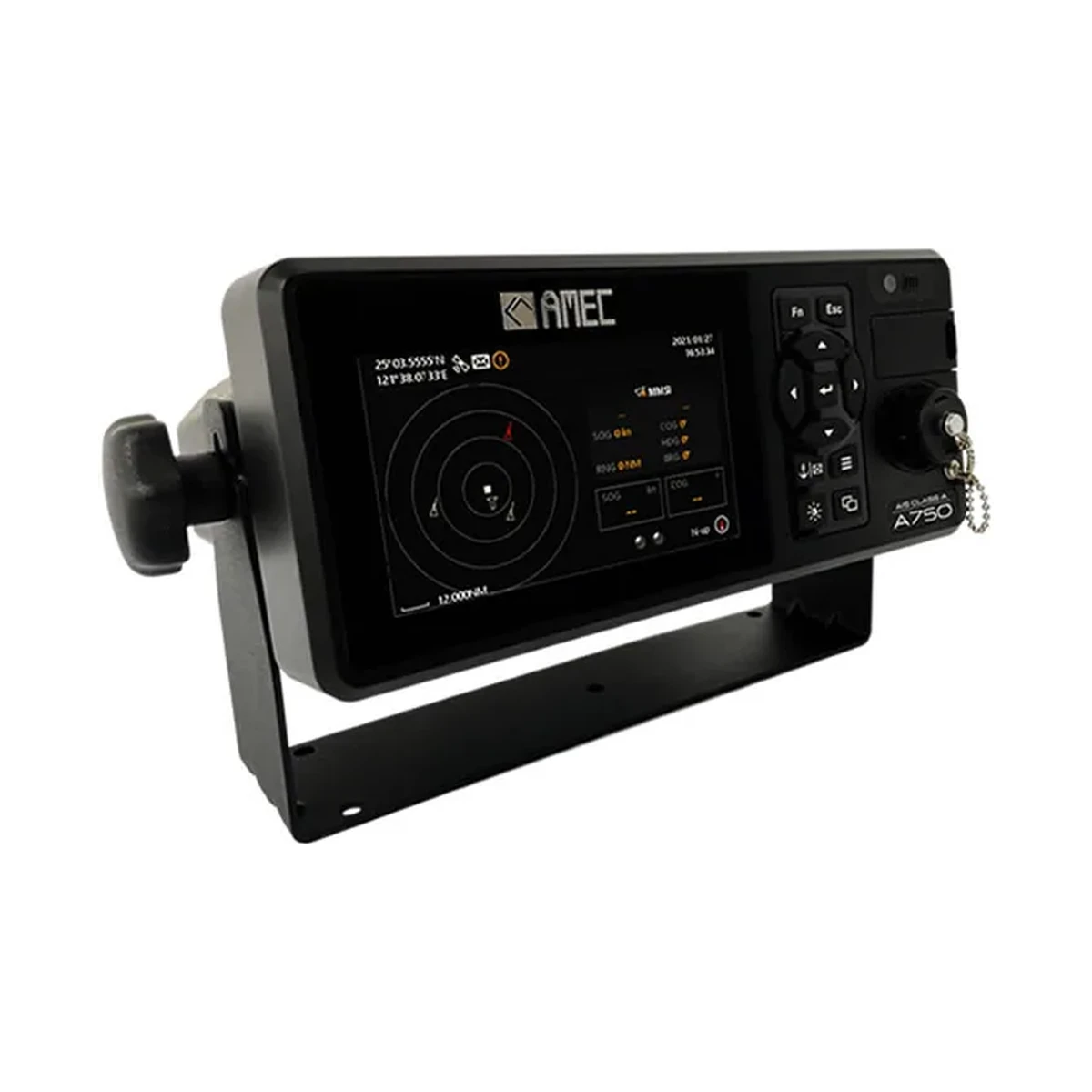
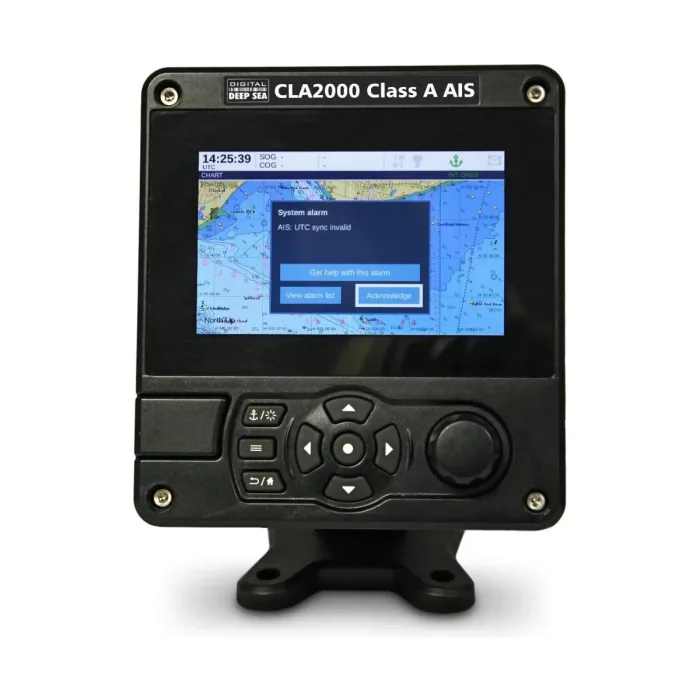
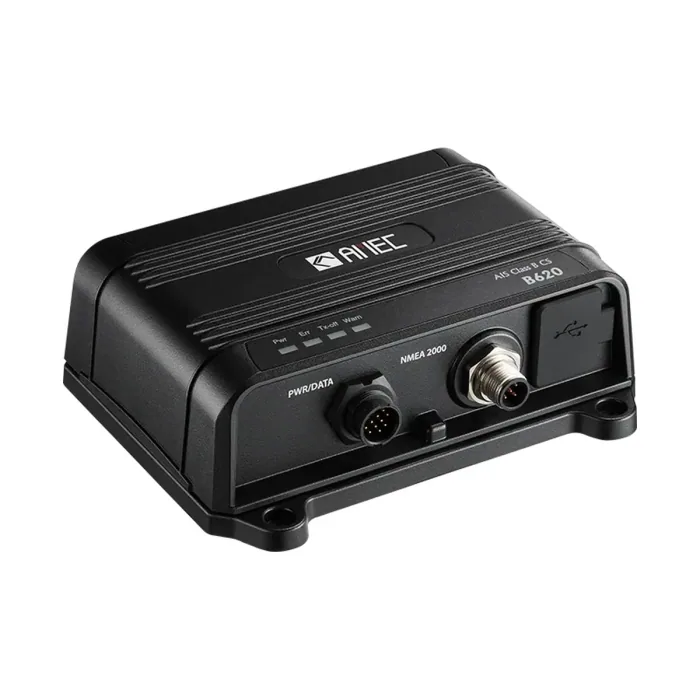
If a vessel is caught by the SOLAS carriage requirement, the equipment fitted has to be a Class A transponder type-approved against the relevant IEC standards, not a Class B unit. The AMEC A750 is certified to IEC 61993-2 Ed. 3.0 for SOLAS and inland use, and the Digital Yacht CLA2000 is a globally approved Class A transponder for SOLAS and inland waterway service. Vessels under no mandate can meet the same practical need with a Class B unit such as the AMEC B620 or the SOTDMA-based AMEC WideLink B650, at lower cost and power draw.
ASPL supplies compliance equipment for commercial marine operations in India, including AIS transponders, AIS SARTs, GMDSS and marine VHF, and handles the bridge interfacing, commissioning and operator handover that goes with it. If you are unsure which side of the threshold a particular vessel falls on, that is worth resolving before specifying hardware, because the answer determines the equipment class rather than merely the budget.