
More than one way to solve the same problem
Explosion-protection standards recognise several distinct methods, or protection concepts, for making electrical equipment safe to use around flammable gases, vapours or dust, each identified by its own Ex letter code. The two most relevant to understand alongside a two-way radio's own protection method are intrinsic safety, marked Ex i, and flameproof enclosure, marked Ex d, because they solve the ignition problem in fundamentally different, almost opposite, ways.
Intrinsic safety: preventing ignition energy from existing at all
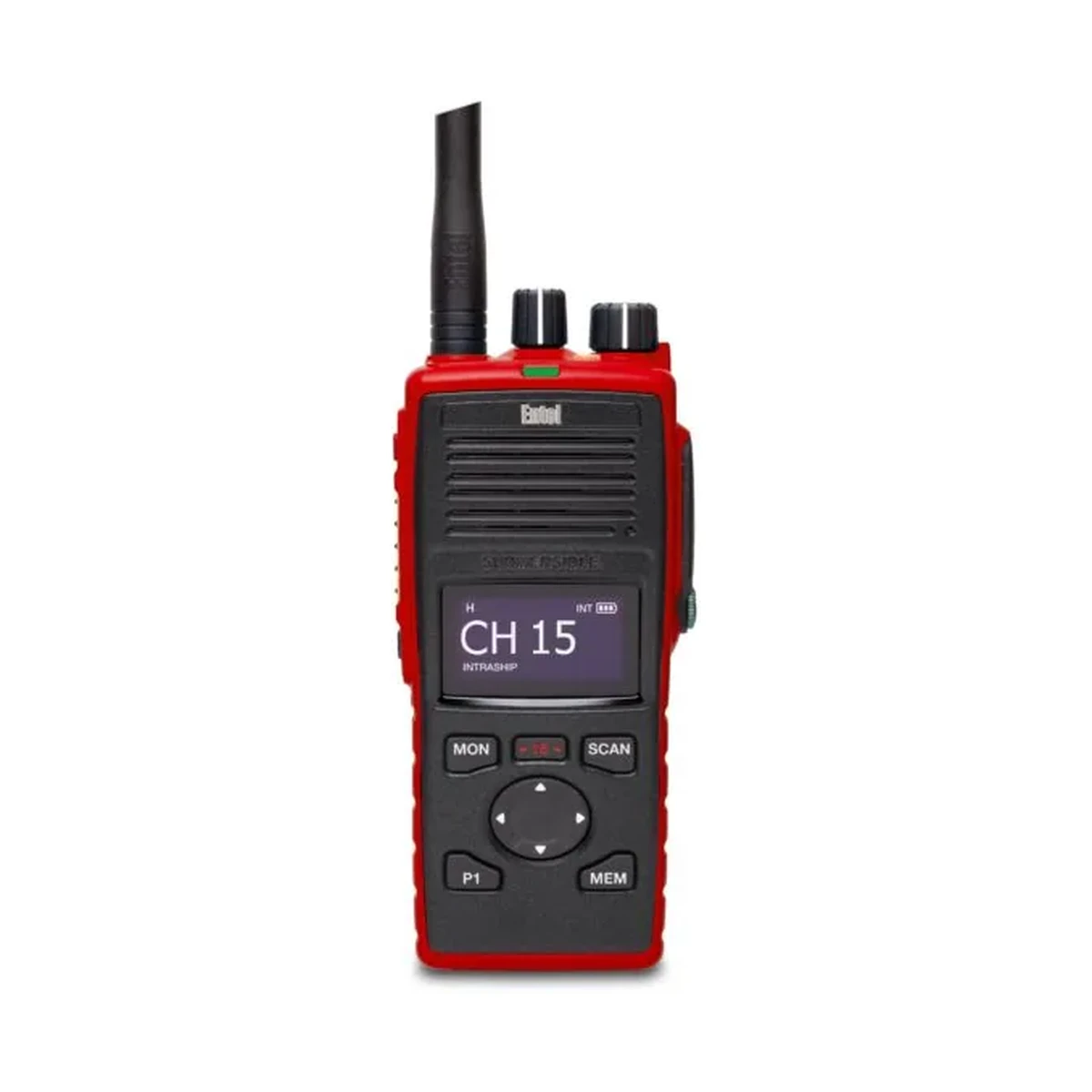
Intrinsic safety, the method behind every radio covered elsewhere in this series, works by limiting the electrical and thermal energy available in a circuit to a level below what is needed to ignite the surrounding atmosphere, even accounting for component faults. The Entel DT944FF, certified Ex ib, is designed so its internal circuits simply cannot release enough energy to cause ignition, under normal operation or under a single specified fault condition. There is, in effect, nothing in the circuit capable of starting a fire even if something inside the radio fails.
Flameproof enclosure: containing an explosion after it starts
A flameproof enclosure, by contrast, does not attempt to prevent a spark or arc from occurring inside the equipment at all. Instead, it encloses any electrical components capable of producing a spark within a robust housing engineered to contain an internal explosion, should one occur, and to cool any escaping gases below their ignition temperature before they reach the surrounding atmosphere. This is a common protection method for larger, higher-power equipment such as motors and certain fixed installations, where limiting circuit energy to intrinsically safe levels is impractical, but it results in heavier, bulkier enclosures than intrinsic safety typically requires.
Why two-way radios use intrinsic safety almost exclusively
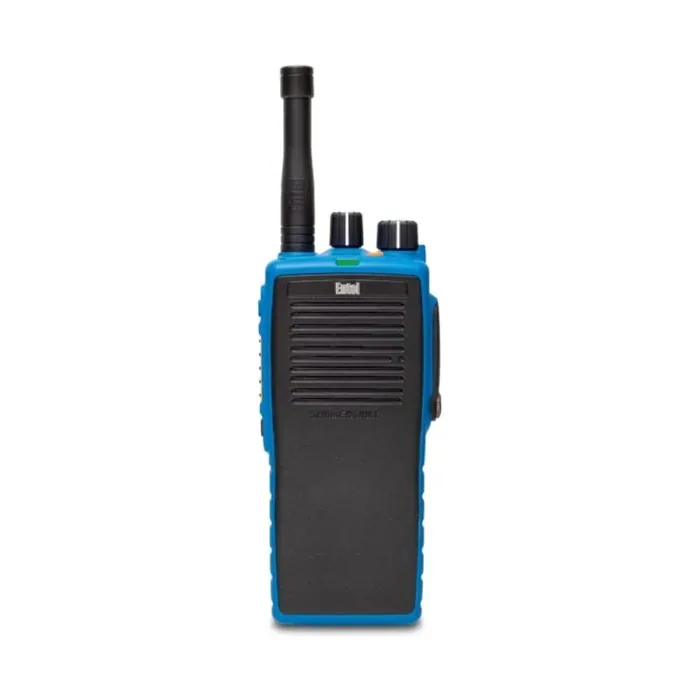
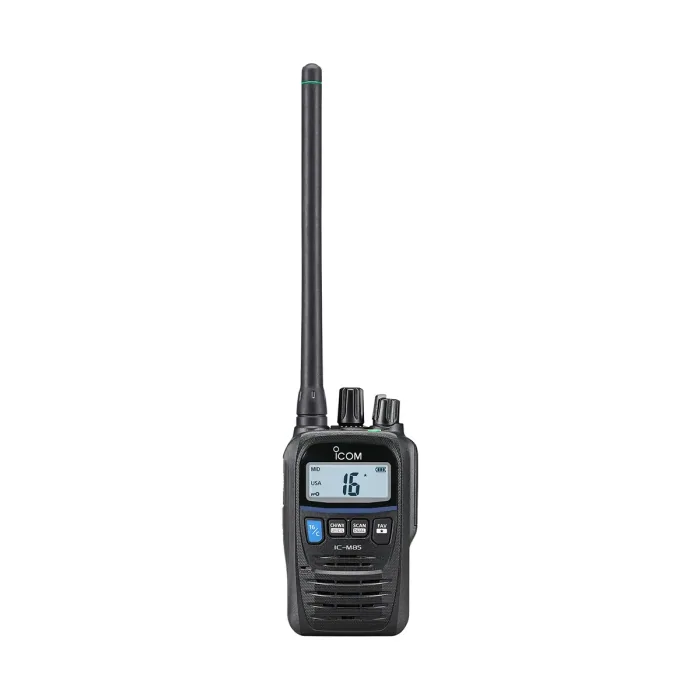
A handheld radio needs to be light, compact and comfortable to carry and operate all day, characteristics fundamentally at odds with the heavy, robust enclosure a flameproof design demands. Intrinsic safety, by contrast, achieves its protection through circuit design rather than physical containment, which is exactly why it suits a portable device: the protection lives in how the electronics are engineered, not in how thick the case is. This is the underlying reason every ATEX or IECEx certified handheld in this catalogue, from the Entel DT982M to the IC-M85UL, carries an Ex ib or Ex ia marking rather than an Ex d one.
ia versus ib: two levels within intrinsic safety
Intrinsic safety itself has two protection levels reflected in the marking's final letter. Ex ia provides the higher level of protection, verified against two independent faults rather than one, and is required for Category 1 equipment used in the most severe, continuously hazardous Zone 0 areas. Ex ib, the level carried by the radios covered throughout this series, is verified against a single fault and suits Category 2, Zone 1 use, which is the classification the great majority of industrial radio use cases actually fall into.
What this means when specifying equipment
- A radio's Ex ib or Ex ia marking specifically identifies it as protected by intrinsic safety, not flameproof enclosure, which is worth knowing when cross-referencing against a site's broader hazardous-area equipment inventory that may include both protection types for different equipment classes.
- Intrinsic safety's reliance on circuit design rather than physical enclosure is precisely why the specific certified configuration, radio, battery and antenna together, matters so much: a substituted component changes the circuit the certification actually tested.
- If a site's classification calls for Zone 0, Category 1 equipment, confirm the specific ia rating rather than assuming ib-rated equipment, sufficient for the more common Zone 1 case, is automatically adequate.
ASPL supplies Entel and Icom's intrinsically safe radio ranges and can help confirm which protection level a specific site's zone classification actually calls for.