
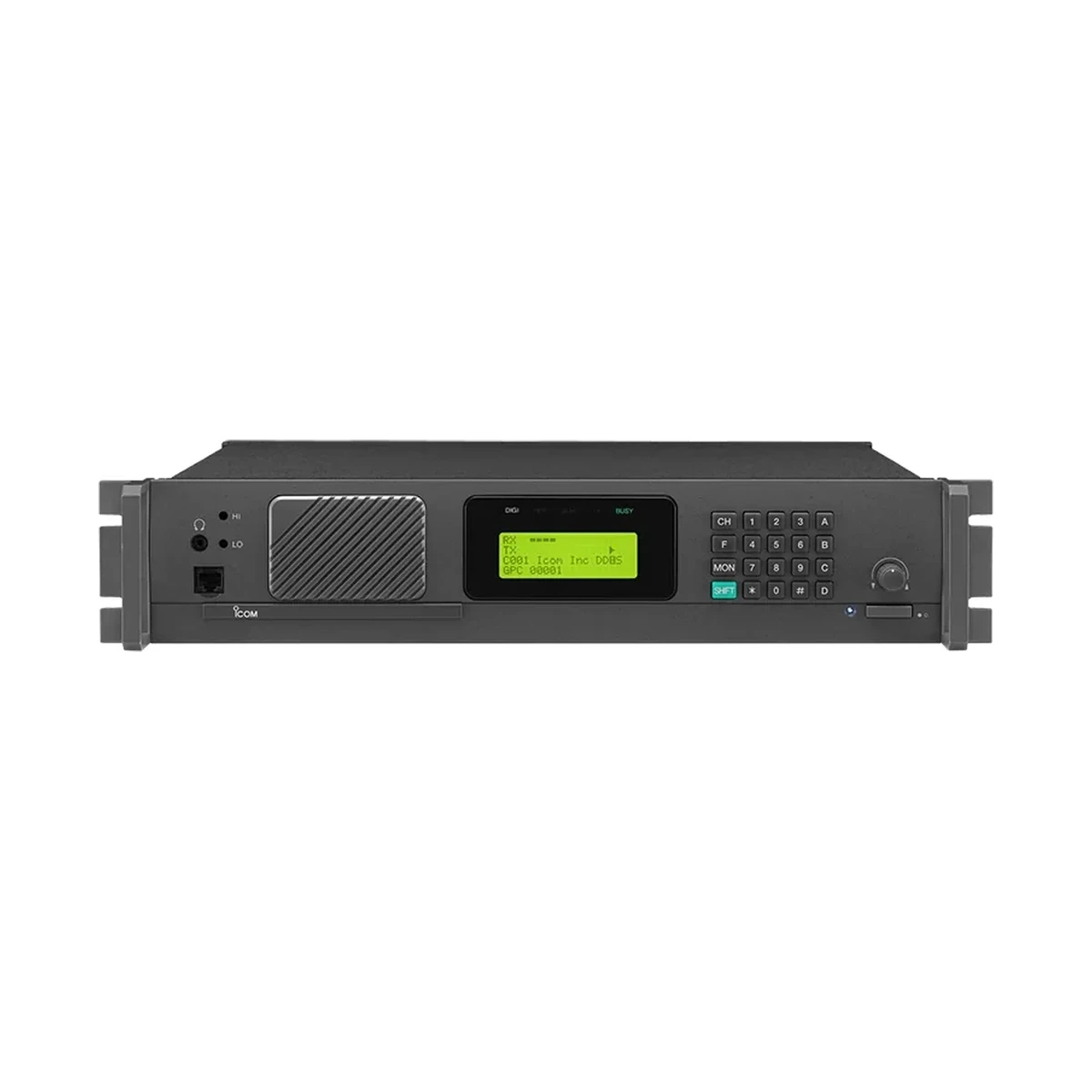
What a repeater actually does
A repeater receives a transmission from a handheld or mobile radio on one frequency and simultaneously retransmits it on a second, paired frequency, generally from an antenna mounted far higher than anything a person or a vehicle could carry. It does not amplify the original signal; it originates a fresh, full-power transmission of its own, from its own location, carrying the same audio. Every other radio on the system listening on the repeater's output frequency hears that retransmission, which is why two handhelds that could never reach each other directly, on opposite sides of a large site, can communicate perfectly well once both are within range of the same repeater.
Why siting matters more than power
VHF and UHF radio propagation is fundamentally a line-of-sight service, and a repeater's coverage is dominated by antenna height far more than by transmit power alone. This is precisely why repeaters are typically installed on rooftops, towers or the highest available structure on a site rather than at ground level: height above the surrounding terrain and obstructions does more for coverage than any realistic increase in output power. A 50 W repeater sited well will comfortably outperform a much higher-power unit sited poorly.
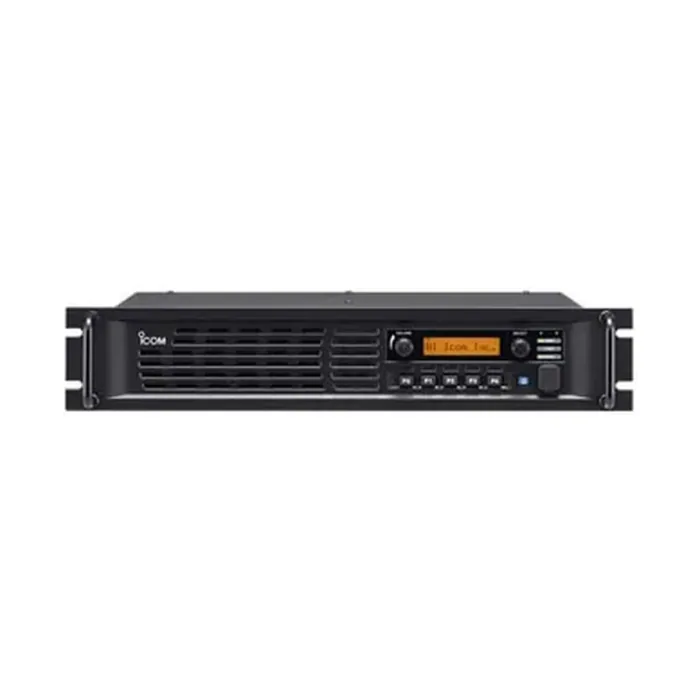
Icom's current repeater range
The IC-FR5000 covers VHF, the IC-FR6000 covers UHF, both delivering 50 W output and, notably, combining two RF modules in a single chassis so digital and analog operation, or two separate channels, can run from one unit rather than requiring two separate repeaters. The IC-FR5300 is a VHF repeater with the same 50/25/5 W selectable output and adds GNSS-correctable frequency stability, tightening frequency accuracy to ±0.1 ppm when locked to a GNSS timing reference, relevant on systems where precise frequency discipline across multiple repeater sites matters. For larger sites needing more raw output, the IC-FR9010 (VHF) and IC-FR9020 (UHF) step up to 110 W and 100 W respectively, with channel capacity extending to 500 channels against the FR5000/FR6000 series' 32.
Duty cycle: a detail worth understanding
The FR5000/FR6000 series' 50 W rating is specified at a 50% duty cycle, with 25 W available at 100% duty cycle, and 100 W achievable at 50% duty cycle with an optional power amplifier. Duty cycle describes how much of the time the repeater can transmit at its rated power without overheating; a busy channel with near-continuous traffic needs to be planned against the sustained, 100% duty cycle figure rather than the higher peak rating, which is a detail worth raising with whoever designs your system rather than assuming the headline power figure applies continuously.
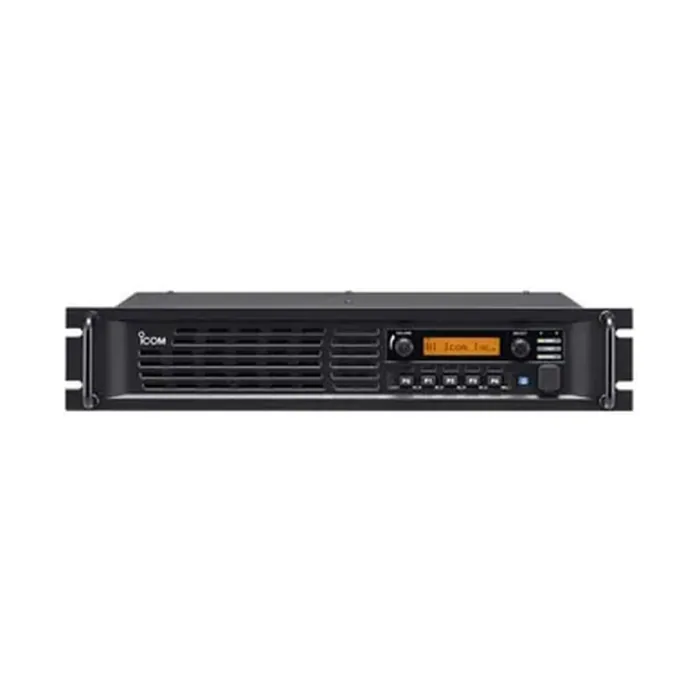
What a repeater needs beyond the unit itself
- An elevated antenna site, the single largest factor in how much coverage the repeater actually delivers.
- A duplexer, to allow the repeater to transmit and receive simultaneously on closely spaced frequencies through a single antenna without one overwhelming the other.
- Adequate power supply and, for continuous outdoor operation, appropriate environmental protection for the installation location.
- Correct frequency coordination, since a repeater's transmit and receive frequencies must be planned to avoid interference with other users of the band.
- For a fleet mixing digital and analog radios, confirmation that the specific repeater model supports the mode mix your fleet actually needs, as covered on the FR5000/FR6000's dual RF module design.
Deciding which repeater fits your site
A single building or a modest campus with moderate traffic is typically well served by the FR5000 or FR6000. A larger site, or one already running a GNSS-disciplined multi-repeater system, may call for the FR5300's added frequency stability. A large industrial site, port or campus needing maximum raw coverage and channel capacity points toward the FR9010/FR9020. ASPL supplies the full Icom repeater range and can help plan site coverage, antenna positioning and duplexer requirements before a repeater is purchased rather than after coverage falls short.