
CTCSS is not encryption
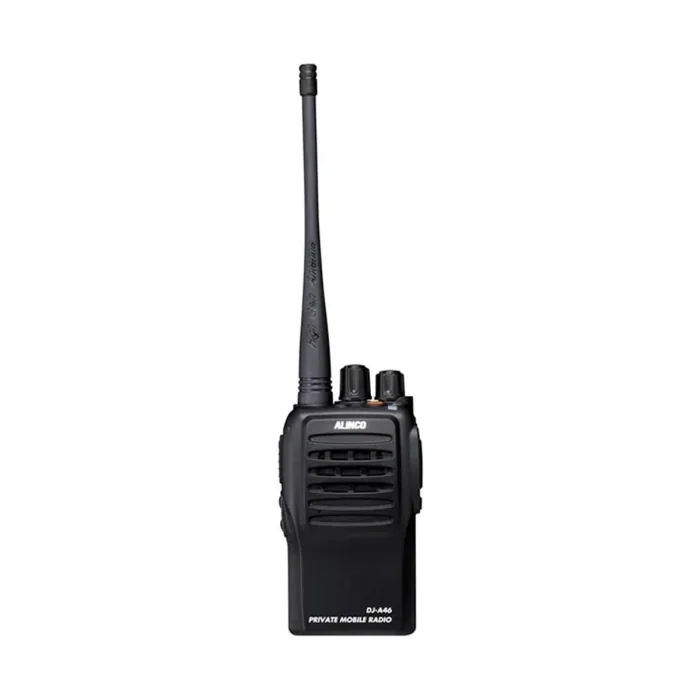
Continuous Tone-Coded Squelch System, CTCSS, is a feature present on many analog and digital radios covered elsewhere in this series, including the license-free Alinco DJ-A46, and it is frequently, incorrectly, assumed to provide privacy. What it actually does is mute a radio's speaker unless an incoming transmission carries a matching sub-audible tone, which prevents a user from hearing unrelated chatter from other users sharing the same physical frequency. It does nothing to prevent someone with different equipment, or no CTCSS filtering at all, from hearing the transmission; the underlying signal is unencrypted and openly receivable by anyone tuned to the frequency. CTCSS is a noise and channel-sharing convenience, not a security feature.
What genuine encryption actually requires
True encryption scrambles the voice or data content itself using a cryptographic algorithm and a shared key, such that a receiver without the correct key cannot reconstruct intelligible audio even if it is tuned to the correct frequency and demodulating the signal correctly. This is a fundamentally different, and considerably more robust, capability than CTCSS's simple tone filtering, and it generally requires equipment specifically built to support it, since encryption has to be implemented in both the transmitting and receiving radio's digital signal processing.
Where genuine encryption appears in this catalogue
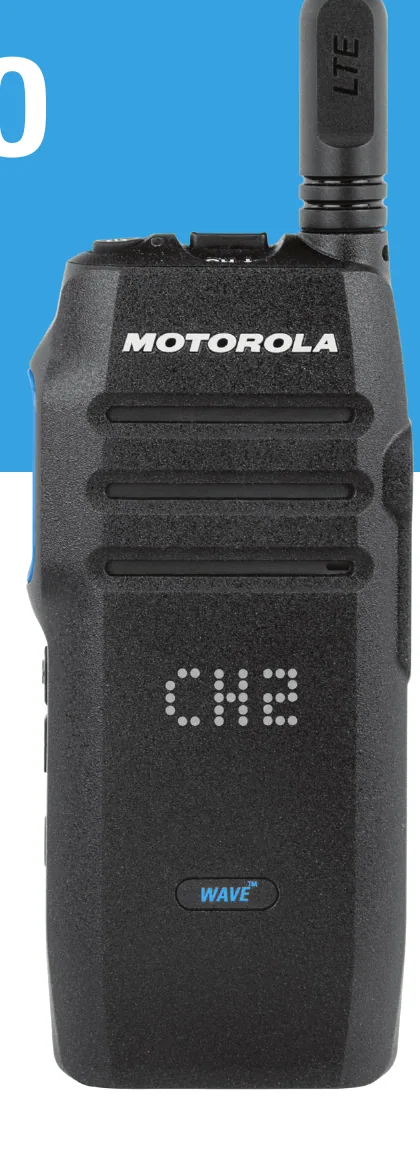
The clearest example is the Motorola TLK-100, which specifies AES-256 encryption as standard, a strong, industry-standard symmetric encryption algorithm, reflecting the device's broadband, IP-network-based architecture where encryption is a natural fit alongside the cellular data connection it already relies on. Conventional DMR and NXDN digital radios can also support encryption as part of their digital protocol implementations, though the specific encryption capability, and whether it is enabled by default or requires additional licensing or configuration, varies by model and should be confirmed directly against the specific radio being considered rather than assumed from its general digital capability alone.
Why digital alone does not imply encrypted
It is a common and understandable misconception that because a digital radio's transmission is a compressed data stream rather than an analog waveform, it is automatically private or secure. This is not correct. A digital transmission is entirely decodable by any receiver built to the same digital protocol, NXDN or DMR, without any additional privacy measure; the digital encoding is about efficient, clear transmission, not confidentiality. Genuine privacy on a digital radio requires the specific encryption capability to be present and actively enabled, not merely inherited from the fact that the radio is digital.
Assessing whether you actually need it
- Routine operational communication, a hotel front desk, a warehouse floor, general site coordination: CTCSS-level channel management is generally sufficient, and genuine encryption is unlikely to be a real requirement.
- Security operations, sensitive commercial information discussed over radio, or any use case where an eavesdropper genuinely matters: confirm actual encryption capability directly, rather than assuming digital transmission alone provides it.
- Regulatory or contractual requirements sometimes specify encryption explicitly for certain operations; confirm any such requirement applies to your use case before assuming a standard digital radio satisfies it.
- Where genuine encryption is required, verify with the manufacturer or ASPL exactly which encryption standard a specific model supports and how keys are managed, rather than treating "encrypted" as a single uniform capability across different radios.
ASPL supplies both conventional digital radio and the encryption-capable TLK-100, and can clarify exactly what privacy or encryption capability a specific model does and does not provide before it is relied on for anything genuinely sensitive.