
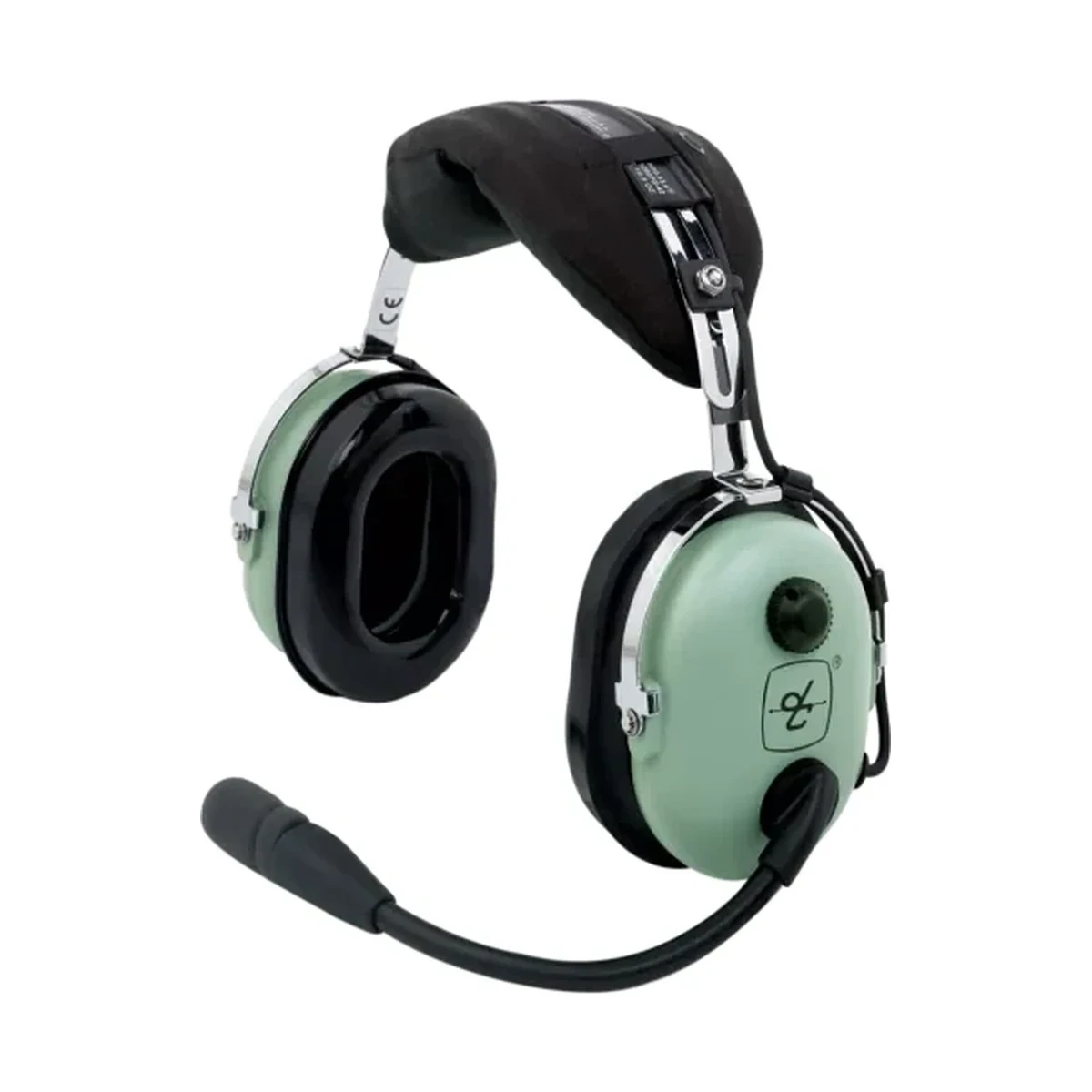
A long-serving design, still current
The David Clark H10-13.4 belongs to a headset family that has been part of general aviation for decades, and its continued presence in flight schools, rental fleets and personal aircraft is not simply inertia. It is a passive headset built around a certified Noise Reduction Rating of 23 dB, measured to the ANSI S3.19 standard and printed on the unit, paired with an M-7A noise-cancelling electret microphone for clear transmitted audio without needing any onboard electronics to achieve it.
No battery, no failure mode to manage
An ANR headset's cancellation depends on working electronics and, in most configurations, a live battery. A passive headset like the H10-13.4 has neither dependency: it attenuates noise mechanically through cushion seal and construction, which means there is no battery to check before a flight, no risk of ANR cutting out mid-flight, and no electronics to fail. For a student pilot on a budget, or a rental fleet where headsets get handed between pilots with no consistent battery-management routine, that reliability is a genuine practical advantage rather than a consolation for a lower price.
Built for a training fleet, not just an owner-pilot
At 16.5 oz, the H10-13.4 is heavier than the premium ANR headsets it is often compared against, but that added weight corresponds to more robust construction, exactly the durability profile a shared rental or training headset needs when it is going to be handled by dozens of different pilots rather than cared for by one owner. A low-profile volume control with detent settings adds a further practical touch for consistent, repeatable adjustment across users rather than a smooth, driftable dial.
Where it genuinely falls short
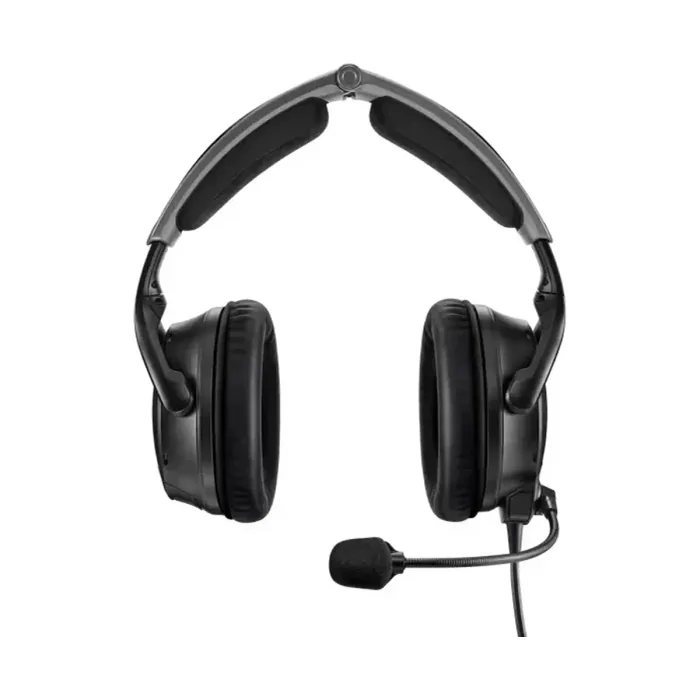
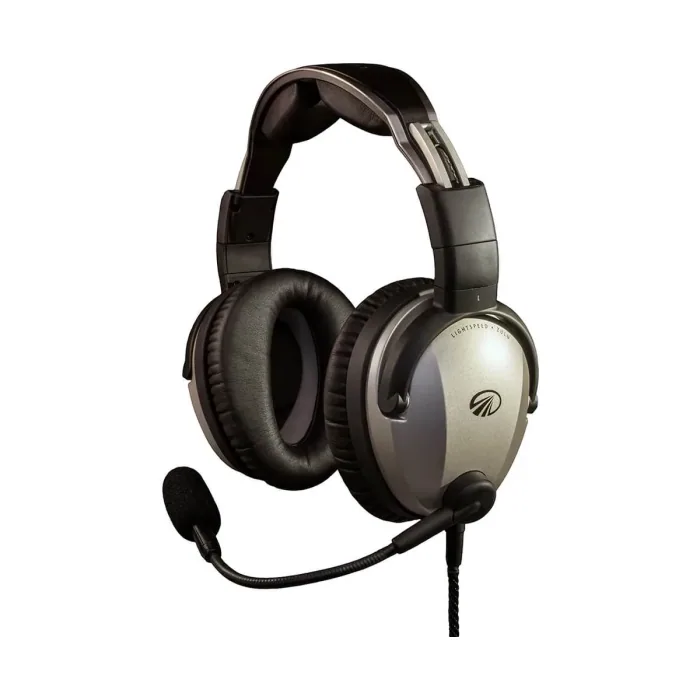
It would be dishonest to present the H10-13.4 as equivalent to ANR at low frequencies. Passive attenuation, whatever its NRR rating, does not match electronic cancellation for blocking the engine and propeller drone that dominates a piston cockpit's low-frequency noise, and pilots flying long days will generally notice more fatigue in a passive headset than in a good ANR one. It also carries no Bluetooth connectivity, so there is no wireless audio path to a phone or EFB the way the Bose A30 or Lightspeed Zulu models offer.
Who it is genuinely right for
- Student pilots and flight schools, where cost, durability and the absence of any battery dependency outweigh marginal comfort gains over a typical training flight length.
- Rental fleets and shared aircraft, where a headset needs to survive being used by many different pilots with inconsistent care.
- Pilots flying shorter local sectors, where ANR's fatigue-reduction benefit has less time to accumulate.
- Anyone who wants a genuinely simple, dependable headset with dual GA plugs and nothing further to think about before a flight.
The honest comparison
Choosing the H10-13.4 over an ANR headset is not a compromise made only for budget reasons, though budget is certainly one legitimate reason. It is a deliberate trade of ANR's low-frequency comfort advantage for mechanical simplicity, lower cost and zero battery dependency, and for a large share of general aviation flying, that trade remains a sound one. ASPL supplies the H10-13.4 alongside the ANR range from Bose and Lightspeed, and can help weigh the trade honestly against how you actually fly.