
The common thread across these sites
Hotels, warehouses and retail stores share a communication pattern that is genuinely simpler than industrial or public-safety operations: a small to moderate number of staff, largely single-building or single-site coverage, and a need for straightforward, reliable push-to-talk communication over individually addressed calling, trunking or GPS tracking. Recognising this early avoids over-specifying equipment built for a much larger, more complex operation.
What actually matters for these sites
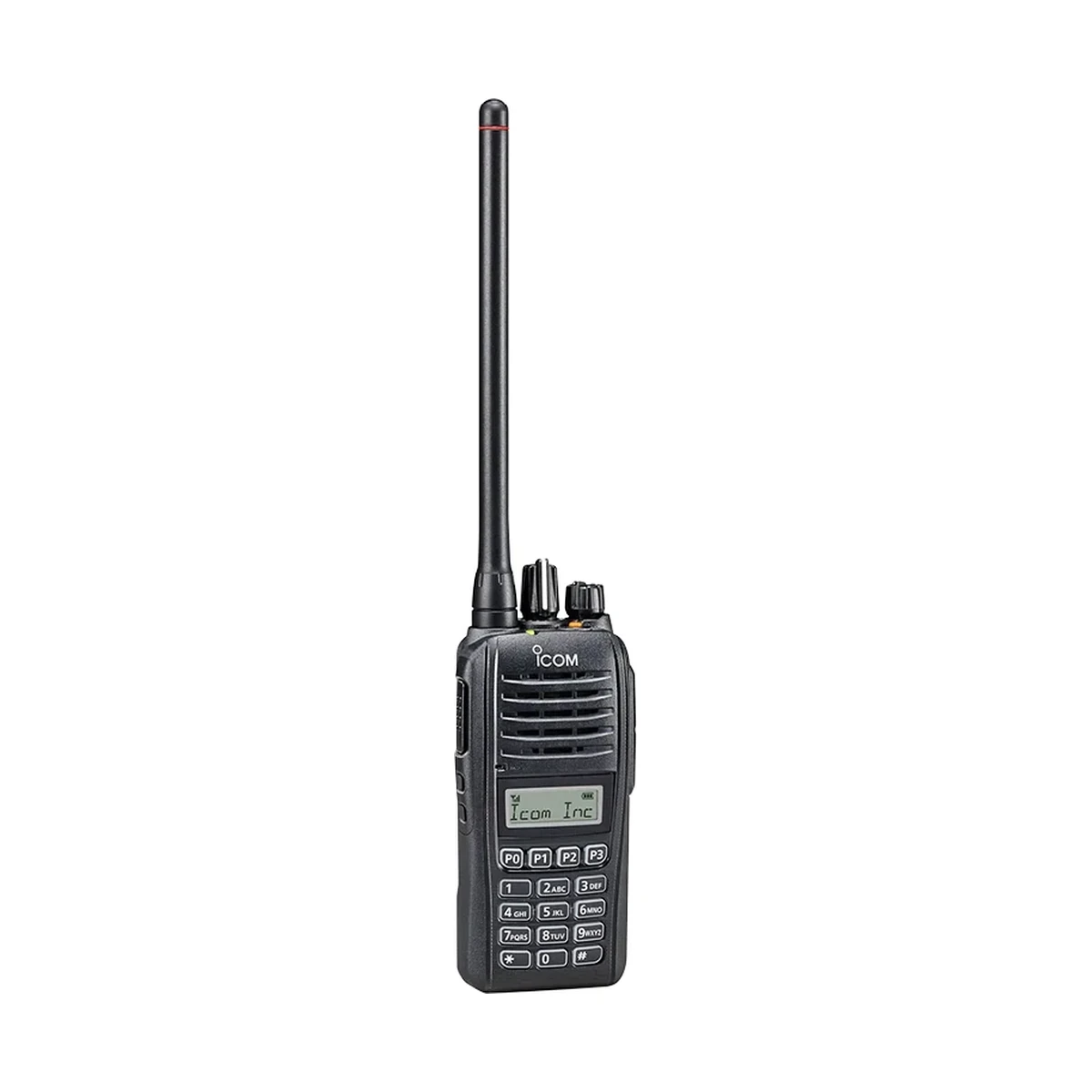
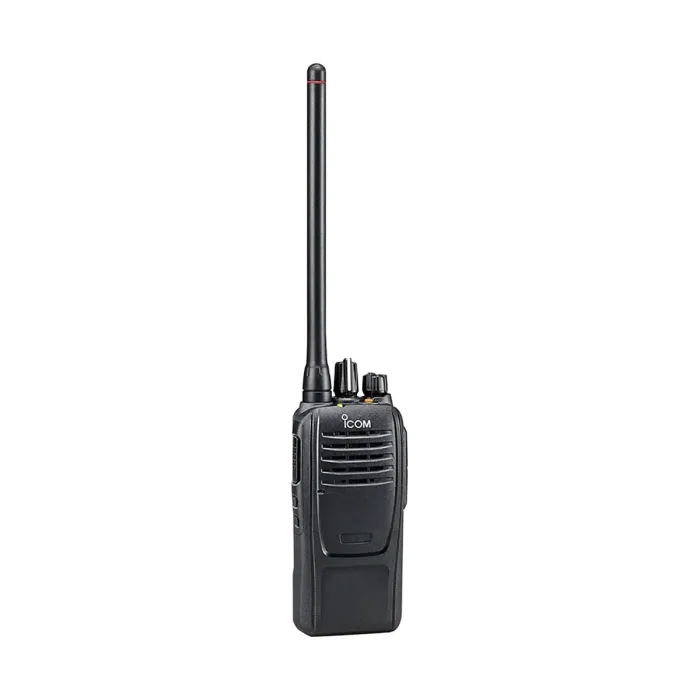
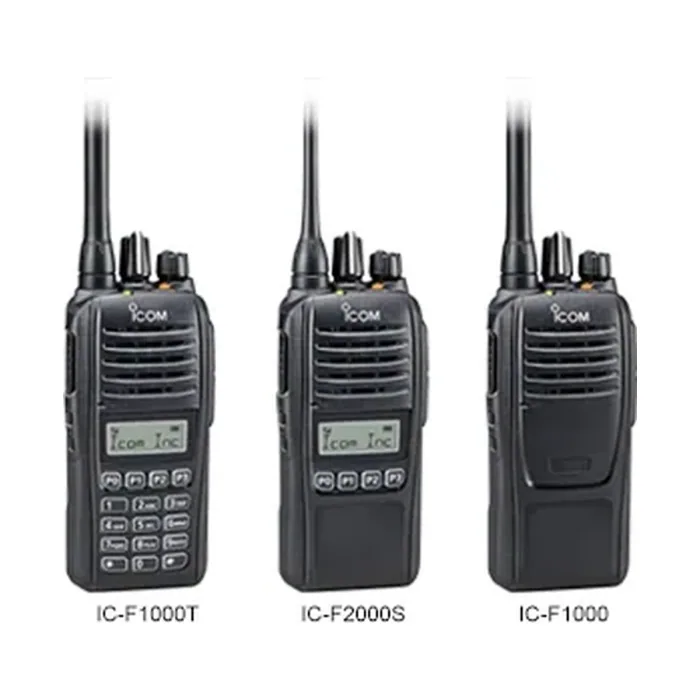
Audio clarity in a noisy environment is a genuine, practical concern, since a hotel lobby, a warehouse floor with equipment running, or a busy retail store all compete with background noise a radio's speaker has to cut through. This is precisely the strength Icom markets on its accessible commercial handhelds: the IC-F1000 (VHF) and IC-F2000 (UHF) both deliver a class-leading 1500 mW of internal audio, specifically aimed at exactly this kind of environment. Battery life across a working shift, durability against being dropped, clipped to a belt and generally handled roughly all day, and simple, fast operation for staff who may not be technically inclined round out the practical priority list, ahead of advanced digital features most of these sites will never use.
Frequency band: VHF or UHF
UHF, 400 to 470 MHz on the IC-F2000, generally performs better indoors and around structure, penetrating walls and floors more effectively than VHF, which makes it the more common choice for hotels, warehouses and retail stores where the building itself is the main obstacle to signal. VHF, 136 to 174 MHz on the IC-F1000, performs better in open outdoor terrain with fewer obstructions, and suits sites with substantial outdoor grounds, a large loading yard, or a resort-style property spread across open space, alongside indoor coverage.
Do these sites need digital?
Generally, no, not as a starting requirement. The individually addressed calling, trunking, GPS and messaging features covered in the digital-versus-analog comparison elsewhere in this series solve problems, coordinating a large distributed fleet, tracking a security patrol, that most single-site hospitality, warehouse and retail operations do not actually have. A straightforward analog fleet on the IC-F1000 or IC-F2000 covers the great majority of these use cases at a materially lower cost than digital equivalents, and the option to move to digital later, as covered in the analog-versus-digital article, remains open if the operation genuinely grows into needing it.
Budget alternatives worth considering
For a very small operation, a handful of staff, a single small site, low daily radio use, Alinco's DJ-A36E or DJ-A41E UHF handhelds offer 128 programmable channels, IP54 dust and splash protection and MIL-STD-810G shock and vibration compliance at a lower price point than Icom's commercial range, while Motorola's GP-328 covers a broad set of VHF and UHF bands with straightforward 16-channel operation for operations that need nothing more elaborate.
A practical buying checklist
- Count actual users, not aspirational future headcount, and buy enough radios to cover them with a modest spare or two, not a large speculative surplus.
- Choose UHF for most indoor-dominant sites, VHF where substantial outdoor open-terrain coverage matters more.
- Start with analog unless a specific, identified need, large distributed fleet, security tracking, genuinely calls for digital's added capability and cost.
- Confirm WPC licensing requirements for your chosen frequencies before committing to a rollout, covered in more depth elsewhere in this series.
- Budget for programming and staff training as part of the rollout, not as an afterthought once radios arrive.
ASPL supplies the full range from entry-level Alinco and Motorola handhelds through to Icom's commercial and digital lines, and can help right-size a fleet to what a hotel, warehouse or retail operation actually needs rather than what looks most capable on a spec sheet.