
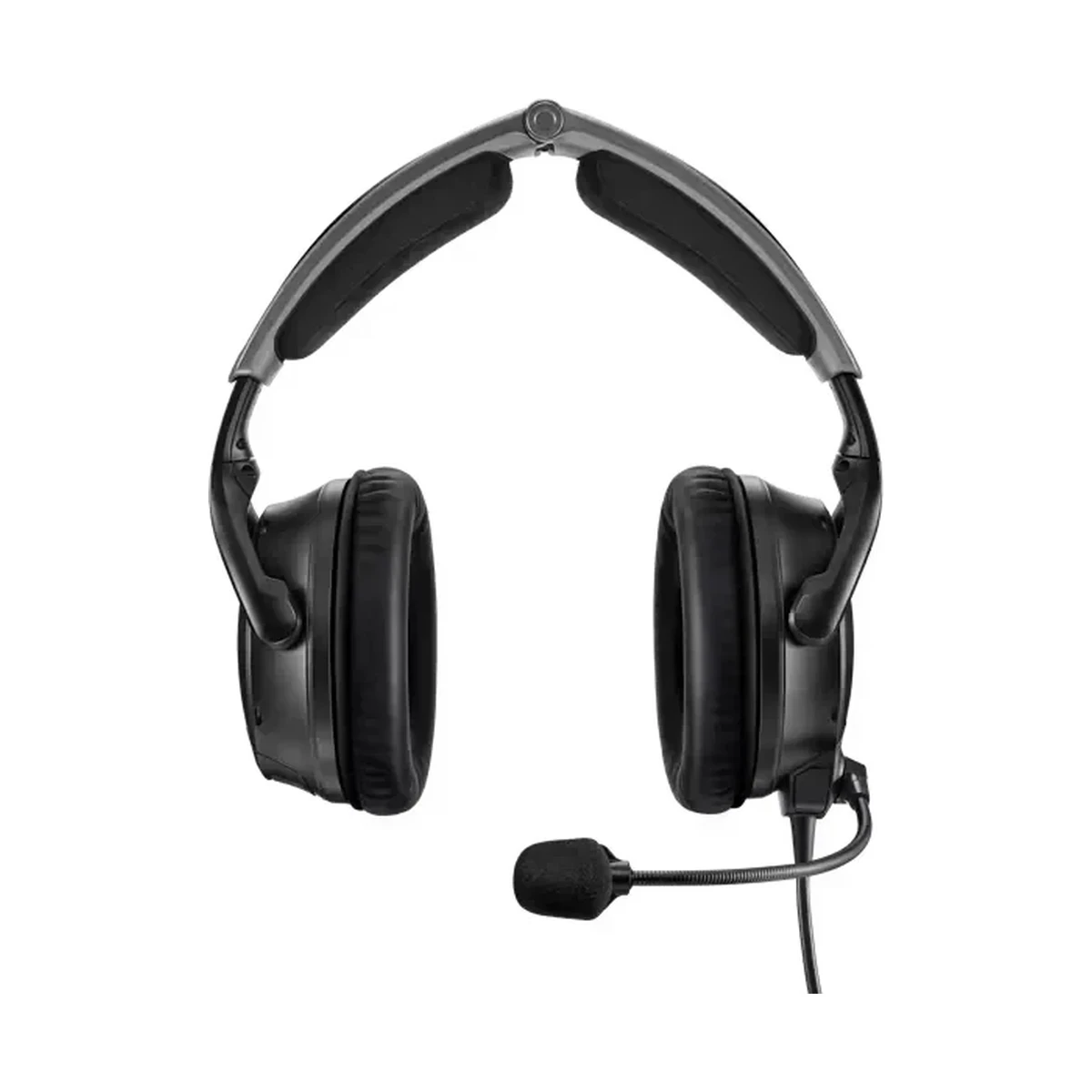
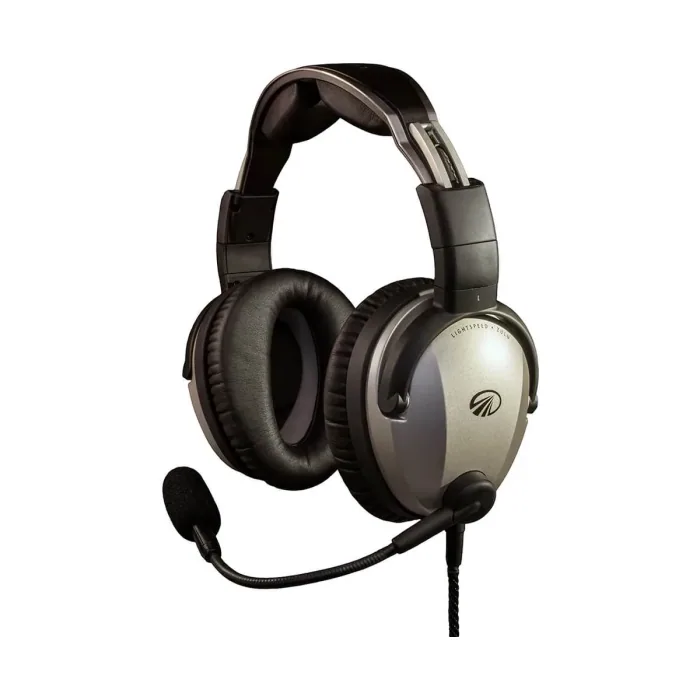
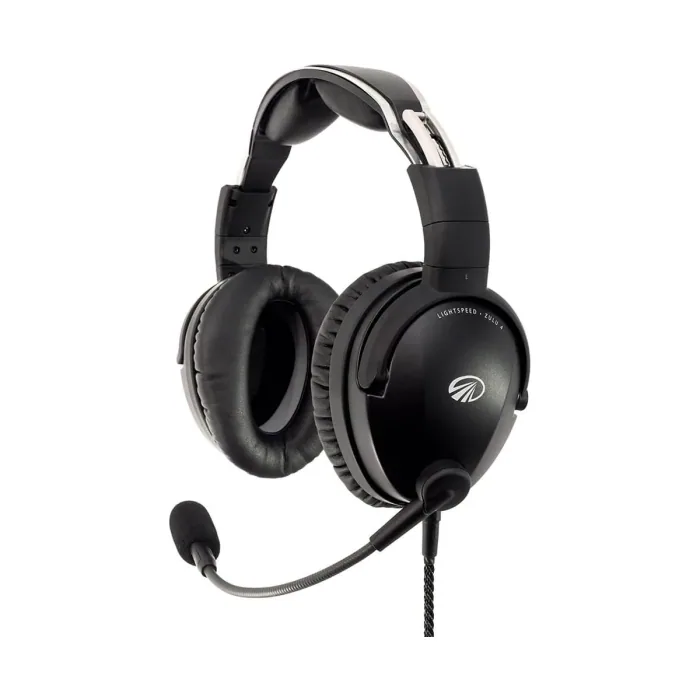
Once a buyer has decided on ANR over passive, the next decision is which premium ANR headset to actually buy. The Bose A30, Lightspeed Zulu 3 and Lightspeed Zulu 4 sit in the same broad category, active noise reduction, Bluetooth connectivity, comparable weight, and the differences between them are genuine but specific rather than one being categorically better.
Weight
The Bose A30 is specified at 14.2 oz on-head, and both the Zulu 3 and Zulu 4 sit at 14.6 oz including ear seals and mic boom. This is a small enough gap that it is unlikely to be the deciding factor for most pilots, though anyone especially sensitive to headset weight over a long flying day may still notice it.
Noise reduction approach
The Bose A30 offers three explicitly selectable ANR modes, low, medium and high, giving the pilot direct control over how aggressively the system works, which suits pilots who want to dial down cancellation in a quieter cabin or maximise it in a loud one. The Zulu 3 applies ANR without that tiered selection exposed to the pilot in the same way, while the Zulu 4 specifically targets a deep, broad low-frequency range and adds magnesium ear cups aimed at improving high-frequency attenuation, an area ANR alone does not address as directly as it does low frequencies.
Bluetooth
All three support Bluetooth, but not identically. The Bose A30 provides wireless audio to EFBs and phones. The Zulu 3 offers full Bluetooth integration for calls, music and aviation app audio alerts. The Zulu 4 goes a step further with dual Bluetooth, meaning two devices, for instance a phone and a tablet running an EFB, can stay connected simultaneously rather than requiring the pilot to disconnect one to use the other.
Power and construction
The Zulu 4 runs from two AA batteries at 3V, with an auto shutoff feature when the headset is not in use, a small but genuinely useful detail for a battery-powered ANR headset that has been left connected in the aircraft between flights. The Bose A30 similarly runs up to 45 hours from two AA batteries. Build details differ too: the Zulu 3 uses Kevlar-core cabling and a low-profile stainless-steel headband contoured to distribute weight and side pressure, while the Zulu 4's magnesium ear cups are a materials choice aimed specifically at attenuation performance rather than just weight saving.
Plug flexibility
The Zulu 4 is notably flexible on connection type, offered with dual GA, panel-power 6-pin, or helicopter U-174 plug options, which matters directly to a buyer flying more than one aircraft type or an aircraft with panel power wiring already in place. The Bose A30 is specified with a dual plug configuration for standard GA use.
Certification
The Bose A30 carries FAA TSO certification and EASA E/TSO-C139a approval, a certification pairing worth confirming against your own operation's requirements if formal headset certification matters for your specific use case, such as certain commercial or training operations.
Warranty
Lightspeed backs the Zulu 3 with a 7-year warranty, a meaningfully long coverage period worth weighing against the total cost of ownership rather than the sticker price alone.
Choosing between them
- Want direct control over ANR intensity: the Bose A30's three selectable modes.
- Flying more than one aircraft type, or an aircraft with panel power wiring: the Zulu 4's plug flexibility.
- Regularly running two Bluetooth devices at once: the Zulu 4's dual Bluetooth.
- Prioritising a long warranty as part of total cost: the Zulu 3's 7-year coverage.
- Formal certification is a specific requirement for your operation: confirm the Bose A30's TSO/EASA approval against what your operation actually needs.
ASPL supplies all three and can talk through which specific differences actually matter for your flying before you commit to one.