
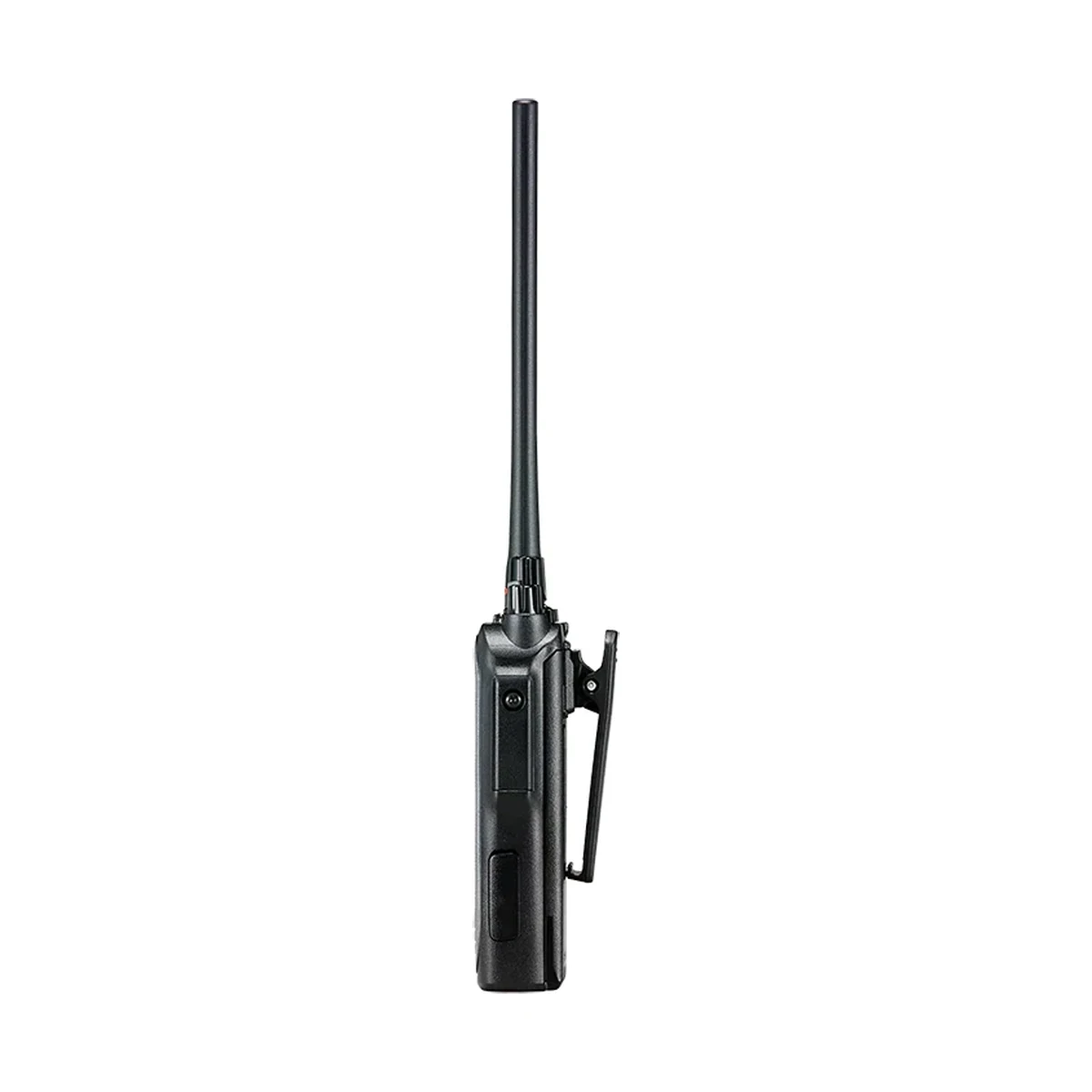
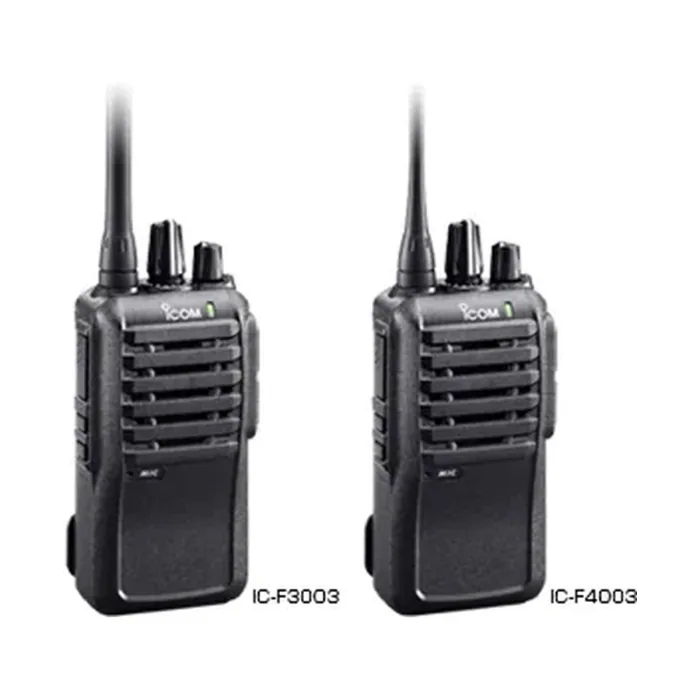
An analog radio such as the Icom IC-F3003 and a digital radio such as the IC-F3400D can look nearly identical, same VHF band, same form factor, same 5 W output, and still behave in genuinely different ways on the air. The difference is not a marketing distinction; it comes from how each one actually encodes voice for transmission.
How analog transmits voice
An analog FM radio like the IC-F3003 varies the transmitted signal continuously to represent the voice waveform directly. This is simple, well understood after decades of use, and it degrades predictably: as a user moves further from a repeater or another radio, the received signal weakens and voice quality fades gradually, getting noisier and quieter but generally still comprehensible right up to the edge of usable range.
How digital transmits voice
A digital radio such as the IC-F3400D or IC-F4400D converts voice into a compressed digital data stream before transmitting it, using a protocol such as NXDN or dPMR depending on configuration. Within the range where the digital signal can be correctly decoded, audio quality stays consistently clear regardless of distance, because the receiver is reconstructing digital data rather than reproducing an analog waveform that has picked up noise along the way. Once the signal weakens past the point of reliable decoding, though, digital radio does not fade gracefully; it tends to drop out more abruptly, sometimes described as falling off a cliff rather than fading like analog does.
What this means operationally
In good signal conditions, well within a site's coverage, digital radio sounds noticeably cleaner than analog, with no background hiss or static riding along with the voice. At the edge of coverage, the comparison reverses: an analog user might still make out a garbled but usable transmission where a digital user hears nothing intelligible at all, or nothing at all. This matters directly for coverage planning, since a digital system needs to be engineered with enough margin that users are not routinely operating near that dropout edge, whereas an analog system's usable range has always included a degraded fringe.
Beyond voice: what digital adds
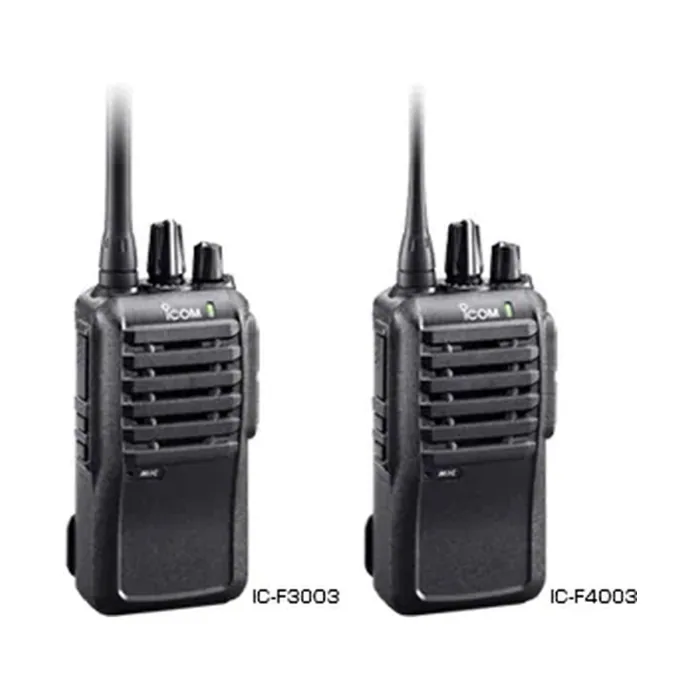
Because digital radio is already carrying data rather than an analog waveform, it can carry more than voice within the same channel. The IC-F3400D and IC-F4400D support features analog cannot: individual and group calling with addressed IDs rather than open channels everyone hears, status and text messaging, GPS location reporting on models that support it, and Over-the-Air-Programming that lets a fleet's radios be reconfigured remotely rather than requiring each unit to be connected to a programming cable individually.
Spectral efficiency
Digital protocols also typically pack voice into less bandwidth than analog FM, which is part of why regulators worldwide have pushed adoption: more usable channels fit into the same allocated spectrum. This is one of the underlying reasons narrower channel spacing, 6.25 kHz equivalent bandwidth in NXDN's case against a traditional 12.5 or 25 kHz analog channel, has become standard on newer digital-capable equipment such as Icom's repeater range.
Mixed-mode operation
A genuinely useful feature of Icom's current digital handhelds is that they are not exclusively digital. The IC-F3400D and IC-F4400D support Mix Mode Operation, running NXDN conventional and dPMR Mode 1/2 digital alongside standard analog, which means a fleet does not have to switch over to digital in a single hard cutover; digital-capable radios can coexist on a system that still has analog units in service during a phased transition.
Choosing between them
- Small site, simple point-to-point communication, budget-sensitive: analog units such as the IC-F3003 or IC-F4003 remain a fully capable, lower-cost choice.
- Larger fleet needing individual calling, status messaging or GPS tracking: digital, such as the IC-F3400D or IC-F4400D, unlocks capability analog simply does not have.
- Transitioning an existing analog fleet gradually: digital radios with mixed-mode analog support let the changeover happen in stages rather than all at once.
- Coverage at the edge of a large or difficult site matters more than data features: analog's graceful degradation may suit some fringe-coverage use cases better than a hard digital cutoff.
ASPL supplies both analog and digital two-way radio across the Icom range in India, and can help plan whether a straight analog fleet, a digital upgrade, or a mixed transition suits your site.